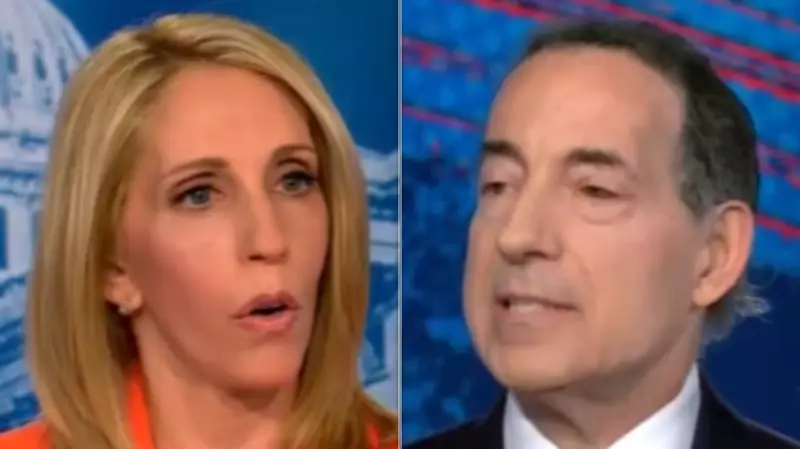
CNN anchor Dana Bash faced significant backlash on Sunday after questioning Representative Jamie Raskin, a Democrat from Maryland, about the heated rhetoric employed by Democrats against President Donald Trump. This inquiry followed a shooting incident that occurred outside the White House Correspondents' Association dinner.
The Exchange
During an appearance on CNN's "State of the Union," Bash asked Raskin whether Democrats should reconsider their language in light of such events. "Do you think twice about that when something like this happens?" she inquired. Raskin responded by asking, "What rhetoric do you have in mind?"
Bash had earlier suggested that divisive political rhetoric has contributed to a rise in political violence in recent years. In his response, Raskin pointed out that Trump has repeatedly referred to the press as the "enemy of the people" and has filed lawsuits against multiple media outlets. He expressed hope that the dinner, which Trump and other administration officials attended, could serve as "a wonderful opportunity to try to reclaim the basic values of the country."

When Bash pressed further, accusing Raskin and his Democratic colleagues of using "some heated rhetoric" against Trump, she cited the party's characterization of the president as "terrible for this country." Bash began to ask about Democrats' responsibility before Raskin interjected.
Raskin's Defense
Raskin clarified that he has no "personal problem" with Trump but is instead focused on criticizing the administration's policies. He specifically mentioned the "authoritarianism" evident during the immigration crackdown in Minneapolis. "I’m talking about policies. I don’t personalize it, and I certainly have never called the press ‘the enemy of the people,’" Raskin stated.
Social Media Reaction
The exchange quickly drew criticism on social media. One user labeled Bash a "complete disgrace," while another claimed that such questioning represents the "kind of bullshit that helped usher Trump right back into office." Others argued that criticizing a president is a fundamental aspect of democracy and not equivalent to incitement.
Several commentators noted the double standard in media coverage, pointing out that Trump's own rhetoric has often been more extreme. One user remarked, "Words aren’t violence. Heated rhetoric is part of democracy. Saying someone is terrible doesn’t mean you want them shot." Another emphasized the importance of speaking truth about Trump's character, stating that silence would only enable his actions.