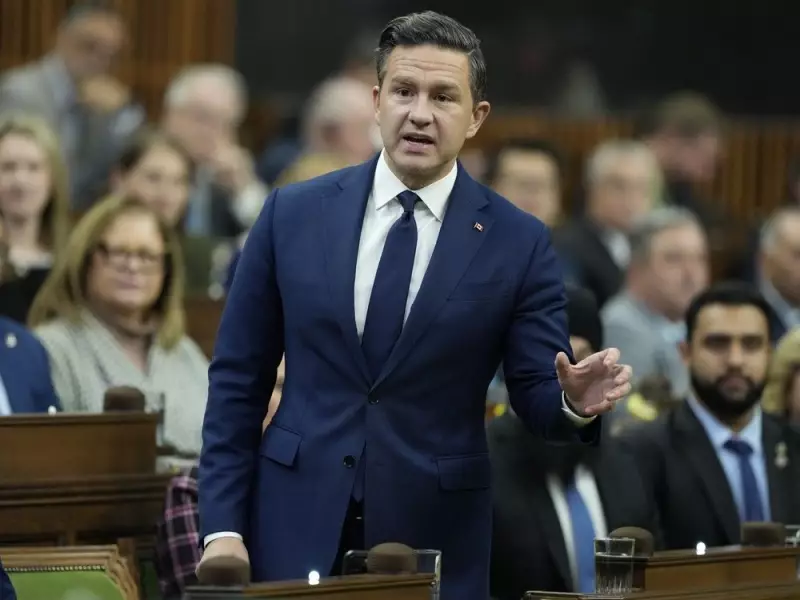
The highly anticipated budget showdown that threatened to topple Canada's Liberal government ended not with a bang, but a whimper. Despite weeks of fiery rhetoric and threats from opposition parties, the government's fiscal plan passed by a razor-thin margin, revealing a stark preference for political survival over principled stands.
The Anticlimactic Vote
When the moment of truth arrived on Monday, the political cliffhanger dissolved into pure anticlimax. The budget passed 170-168, surviving primarily due to strategic abstentions rather than enthusiastic support. Two New Democratic Party MPs and two Conservative MPs chose not to vote, allowing the Liberal minority government to scrape through.
Green Party Leader Elizabeth May, who had previously opposed the budget's support for fossil fuels, ultimately backed the government after Prime Minister Mark Carney promised to meet Canada's Paris Agreement climate targets. Meanwhile, one of the abstaining Conservative MPs, Shannon Stubbs, cited medical leave, though her active Instagram feed throughout the week raised questions about her ability to participate remotely.

Why Nobody Wanted an Election
The real story behind the budget's passage was simple: nobody wanted a Christmas election. Polls indicated that another vote would likely replicate the current minority government situation, leaving no party better off while costing millions in campaign expenses.
Conservative insiders confirmed this calculation, admitting the timing wasn't right. The party faces internal challenges, including recent MP defections and growing dissatisfaction with leadership. According to the latest Angus Reid data, Conservative Leader Pierre Poilievre's approval has hit its lowest point since he became leader, showing particular weakness among women, urban voters, and even parts of the traditional Tory base.
The NDP, meanwhile, finds itself in an equally unenviable position: leaderless, financially strained, and lacking any appetite for a costly campaign. The fact that two Conservative MPs also abstained provided convenient cover for the NDP's own lack of unity.
Political Fallout and Leadership Challenges
Prime Minister Mark Carney emerges as the clear winner from this political drama, having navigated treacherous parliamentary waters without making significant concessions. The outcome demonstrates his government's ability to survive despite facing multiple parties with different grievances.
For Pierre Poilievre, the situation is more complicated. Over the weekend preceding the vote, he rejected calls to moderate his tone, pledging to continue fighting for an affordable Canada—a message that resonates with his core supporters but may not broaden his appeal.
The Conservative leader faces a crucial leadership review vote in January in Calgary, where he needs a strong showing—preferably above 90 percent but certainly no lower than 80 percent—to maintain his authority. Insiders report that factions have emerged within the party over Poilievre's leadership, though with no obvious successor, any challenge remains unlikely.
The budget drama ultimately revealed that when faced with the choice between principle and political calculation, Canada's federal parties overwhelmingly chose the latter. While this allowed the government to survive, it left taxpayers facing the consequences of a spending plan that multiple parties had publicly criticized but ultimately enabled through their actions—or lack thereof.