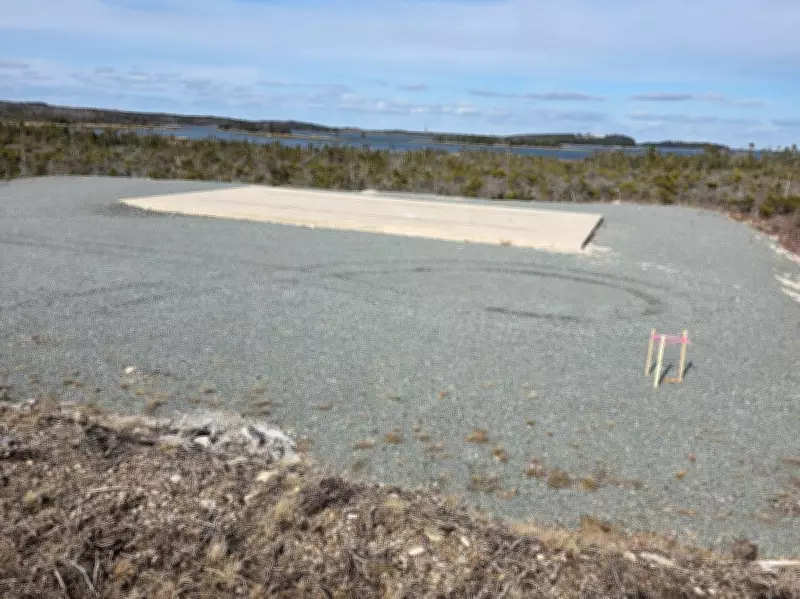
The Canadian government has announced a $200 million investment over ten years to develop a 'sovereign space launch' capability at Spaceport Nova Scotia, a facility that currently comprises little more than a concrete pad in rural Nova Scotia. The site, located near the community of Canso, has been described by critics as consisting of a gravel road, two shipping containers, and a 25-by-35-foot concrete pad.
Details of the Investment
Defence Minister David McGuinty announced the agreement last month, which will see the site's operators, Maritime Launch Services, receive $200 million in federal funds over the next decade. The funding is intended to support the development of Canada's independent space launch capabilities, reducing reliance on American infrastructure for satellite launches.
Current State of the Spaceport
Despite breaking ground four years ago, recent images from Google Maps and on-site visits reveal minimal infrastructure. Local activist Marie Lumsden, a member of Action Against Canso Spaceport, documented the site in March, noting only a gravel road, two sea cans, and an unserviced concrete pad. The facility has launched only two rockets to date, one of which was built by a university rocketry club.

Government and Operator Statements
Maritime Launch Services has touted the spaceport as Canada's first commercial spaceport, claiming it will unlock growth in the Canadian space sector and create economic opportunities. The government has introduced the Canadian Space Launch Act, which aims to foster a $40 billion space launch industry. However, critics question the value of the investment given the site's rudimentary state.
The agreement effectively pays the operators $50,000 per day over ten years, a figure that has drawn scrutiny from opposition MPs and local activists. The site's remote location in Nova Scotia has also raised environmental and logistical concerns.