Canada Sees Influx of Arrivals from Middle East as Iran Conflict Enters Second Week
The ongoing war in Iran, now reaching its one-week mark, has led to a significant rise in the number of Canadians arriving from the Middle East. Many travelers are landing in Toronto, expressing profound relief to be back on home soil amid the escalating violence overseas. This development underscores the broader regional instability triggered by the conflict.
Government Response and Travel Advisories
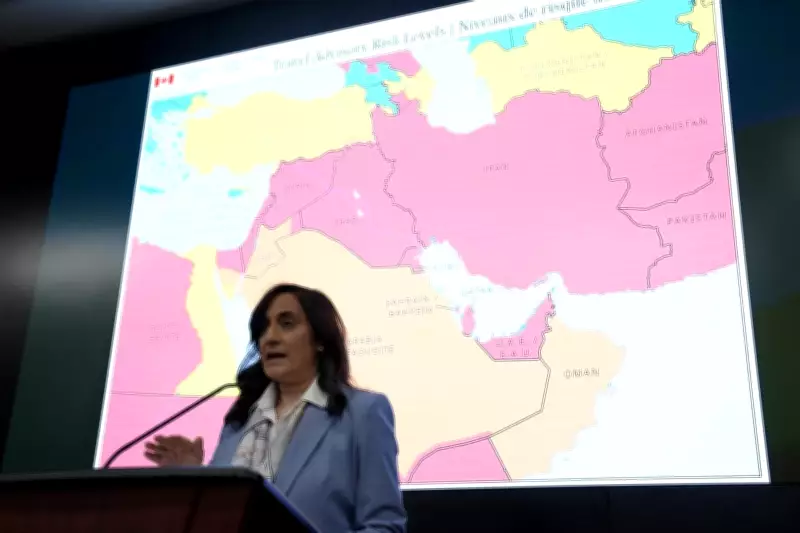
In response to the crisis, Global Affairs Canada has been actively updating travel advisories for the affected region. Minister of Foreign Affairs Anita Anand recently addressed the situation at a news conference held at the Emergency Watch and Response Centre in Ottawa. A map displaying travel advisory risk levels in the Middle East was prominently featured during her briefing, highlighting the areas of highest concern.
The Canadian government is urging citizens to avoid all non-essential travel to Iran and neighboring countries due to the severe security risks. Officials are coordinating with international partners to ensure the safety of Canadians abroad, though specific evacuation plans have not been publicly detailed at this time.

Personal Accounts of the Conflict
Among those affected are Montreal residents who have been anxiously awaiting the opportunity to return home. One individual recounted, "The bombs woke me up," describing the terrifying experience of being caught in the conflict zone. Such firsthand accounts emphasize the human toll of the war and the urgency of the situation for expatriates and travelers.
The influx of arrivals is primarily concentrated at major airports like Toronto Pearson International, where support services are being mobilized to assist returnees. Many express gratitude for the relative safety of Canada, contrasting sharply with the chaos they left behind.
Broader Regional and Economic Impacts
The war in Iran is not only a humanitarian crisis but also a catalyst for wider economic disruptions. Notably, oil and gas prices have surged rapidly as the conflict shows no signs of abating, affecting global markets. Additionally, Formula 1 has indicated a potential delay in deciding the fate of two scheduled Middle East races in April, reflecting the extensive reach of the instability.
As the situation evolves, Canadian authorities continue to monitor developments closely, prioritizing the well-being of citizens overseas. The coming days will be critical in determining the conflict's trajectory and its implications for international travel and security.