Carney's Davos Address: A Call for Truth or Political Theater?
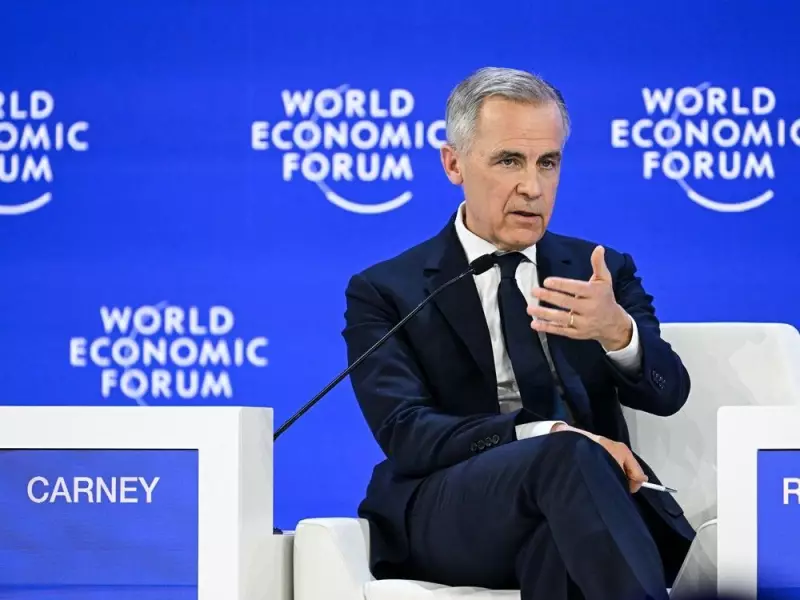
Prime Minister Mark Carney delivered a provocative speech at the World Economic Forum in Davos this week, challenging the global elite to confront uncomfortable truths about the international order. His address to financiers, political leaders, and celebrities represented a dramatic departure from conventional diplomatic rhetoric, but it has sparked intense debate about whether his words reflect genuine conviction or calculated positioning.
The Substance of Carney's Challenge
During his historic appearance at the annual gathering, Carney accused the Davos crowd of "living within a lie" by perpetuating what he described as the fiction of the international rules-based order. Drawing inspiration from Czech dissident Vaclav Havel's famous critique of communism, Carney invoked Havel's metaphor of the greengrocer who outwardly conforms while privately rejecting the system.
The Prime Minister called upon middle powers worldwide to "live the truth" and "name reality" as they navigate the renewed great power rivalry between the United States and China. He implored nations watching with concern as a "Trumpified America" confronts authoritarian China to "act consistently" and "build what we claim to believe in." While Carney never explicitly uttered the phrase "middle powers of the world unite," this sentiment formed the clear subtext of his message.

Questions of Credibility and Consistency
The power of Carney's rhetoric is tempered by legitimate questions about his political consistency. As Conservative MP Michelle Rempel Garner noted in her response to the speech, Carney's Liberals could be accused of perpetuating their own version of reality to Canadians during much of the Trudeau government's tenure.
During that period, household costs and immigration levels surged dramatically while housing construction and service provision declined significantly. Yet Canadians were repeatedly assured that everything was proceeding well. Although Carney wasn't formally part of the Trudeau government, he never publicly challenged its narratives or policies during that time, instead maintaining a position on the sidelines while frequently being rumored as a potential addition to the team.
Carney's Political Evolution
This context makes Carney's Davos transformation particularly noteworthy. The Prime Minister has a documented history of embracing positions that he later abandons. His 2021 book "Values" contained extensive environmental advocacy that has since faded from prominence in his political agenda. Similarly, his previous commitment to a "values-based foreign policy" has diminished over time.
As one observer noted, Carney himself embodies the "Davos Man" persona he now criticizes. He has participated in and benefited from the very system he now questions, having served as Governor of the Bank of England and Bank of Canada before entering politics. This background doesn't necessarily invalidate his current message, but it does create a credibility gap that requires addressing through concrete action rather than eloquent speeches.
The Changing Global Landscape
Carney's speech arrives during a period of significant global transformation. The return of Donald Trump to the American presidency has created unprecedented uncertainty in international relations, with the United States adopting increasingly transactional approaches to diplomacy and trade. Meanwhile, China continues to assert its influence through authoritarian means, creating difficult choices for middle powers like Canada.
In this context, Carney's call for truth-telling and consistent action represents both a moral challenge and a strategic imperative. Middle powers face genuine dilemmas as they attempt to navigate between competing superpowers while maintaining their sovereignty and values. The question remains whether Carney's government will translate his Davos rhetoric into substantive policy changes that reflect the principles he articulated.

As one commentator observed, a genuine political conversion requires demonstration through action rather than declaration through words. Carney's speech has established an ambitious framework for Canadian foreign policy and global engagement. The coming months will reveal whether his government possesses the commitment and capability to transform powerful rhetoric into meaningful reality on the world stage.