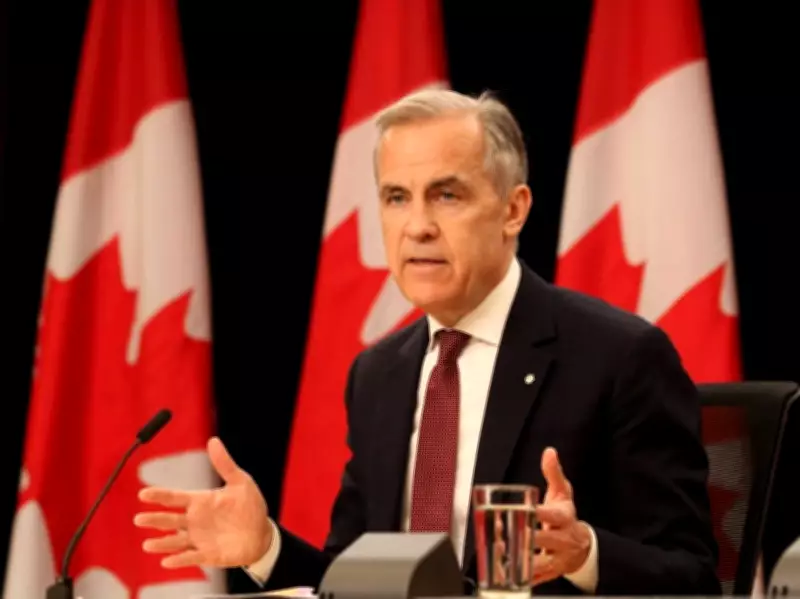
PM Carney's Leadership Questioned Over Iran Stance and Oil Industry Meeting
Prime Minister Mark Carney is facing mounting criticism for what observers describe as a pattern of leadership weakness, highlighted by his recent statements on international strikes against Iran and his earlier interactions with Canada's oil and gas sector. The controversy centers on Carney's apparent reluctance to take firm positions, instead allegedly yielding to pressure from within his own Liberal Party caucus.
Oil Industry Meeting Reveals Early Leadership Concerns
In June of last year, shortly after his election victory, Carney met with oil and gas executives in Calgary. According to multiple attendees, the prime minister listened attentively to their economic proposals and expressed agreement, only to ultimately defer decision-making to his caucus. "Yes, but you know I have a caucus to deal with," Carney was quoted as saying, revealing what critics argue was an early sign of his unwillingness to challenge environmentalist factions within the Liberal Party.
Despite these executives owing their political survival to Carney's leadership takeover, the prime minister reportedly allowed party dynamics to override potential economic initiatives. This episode has resurfaced as analysts draw parallels to his more recent handling of international affairs.

Contradictory Statements on Iran Strikes
Carney's response to American and Israeli military actions against Iran's regime has further fueled the leadership debate. His initial statement on Saturday took a strong position, asserting Canada's support for preventing Iran from obtaining nuclear weapons and threatening international security. However, he later qualified this by declaring the strikes "inconsistent with international law," stating Canada could not have participated if asked.
"There was no need for the PM to go down this road," critics argue, noting that Carney had already detailed Iran's violations of international law, including the murder of Canadians. By adding the legality caveat, Carney appears to be placating left-wing party members who seek moral equivalence, undermining his own moral argument against the Iranian regime.
First Instinct Versus Political Calculation
Observers note that Carney's initial instincts often appear correct but are frequently tempered by political considerations. In his Wednesday news conference, he reiterated the regime's atrocities, calling Iran "the biggest exporter of terror in the world" and highlighting its repression and violence. Yet, his subsequent legal qualifiers have diluted this message, leading to accusations of failed leadership.
True leadership, analysts suggest, would involve consistently making the moral case for decisive action, rather than retreating to cautious, legally nuanced positions that satisfy party factions. Carney's handling of both the oil industry meeting and the Iran situation suggests a leader more focused on internal party management than on bold, principled governance.
Broader Implications for Canadian Foreign and Economic Policy
This pattern raises concerns about Canada's stance on critical international and economic issues. If Carney continues to prioritize caucus harmony over clear policy direction, it could weaken Canada's global position and hinder domestic economic growth. The prime minister's ability to lead effectively is now under intense scrutiny, with many questioning whether he can overcome internal party pressures to provide the strong leadership many Canadians expect.