Carney's Historical Reference in Quebec Unity Speech Draws Criticism
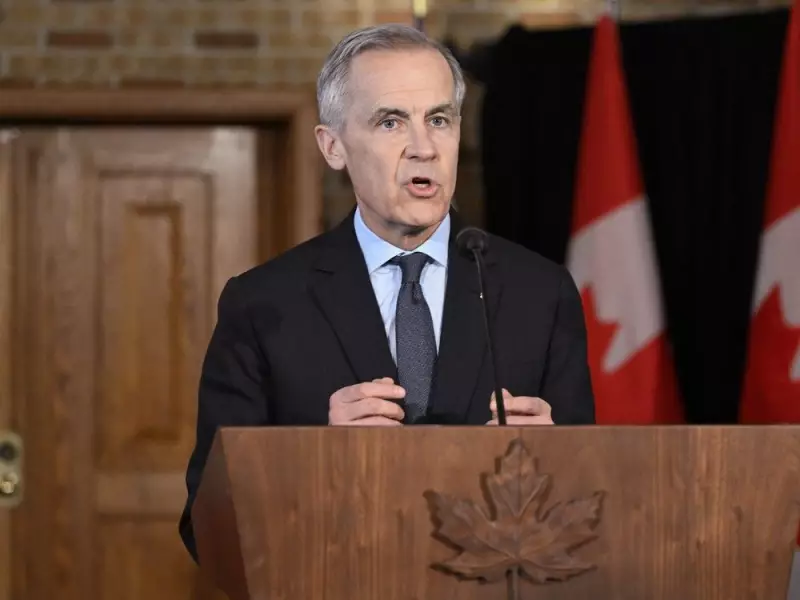
Prime Minister Mark Carney's recent speech on Canadian unity has sparked significant debate and criticism, particularly regarding his choice of historical reference points. Delivered in Quebec City, the address aimed to promote national cohesion but instead created controversy by beginning with a discussion of the Battle of the Plains of Abraham.
A Missed Opportunity for Unity
Many observers have questioned why Carney would select such a divisive historical event when a more appropriate alternative existed. The Battle of the Plains of Abraham represents a painful memory for many French Canadians, marking the beginning of British rule over French-speaking inhabitants. This choice seemed particularly puzzling given Carney's stated goal of fostering partnership and unity among Canadians.
There was another, more fitting historical battle that occurred in Quebec City that could have better served Carney's message. On December 31, 1775, American invaders were defeated by a combined force of French Canadians, English-speaking Canadians, and British soldiers and sailors. This event demonstrated how Canadians could set aside their differences when faced with external threats.

The 1775 Battle of Quebec: A Unifying Example
The Continental Army had invaded the British colony of Canada in September 1775, capturing Montreal and Trois-Rivières in quick succession. Their ultimate goal was Quebec City, the last major population center. Had they succeeded, Canada might have become the fourteenth American colony.
Historical records indicate that 543 French-Canadian militia, 330 British militia, and 927 British soldiers, sailors, and other military personnel united to defend Quebec City. Their successful defense not only repelled the American invasion but ultimately helped establish the border between Canada and the United States.
At a time when Canada faces political and economic pressures from the United States, this historical example of unity against external threat would have perfectly illustrated Carney's call for national solidarity.
Questions About Speech Preparation and Political Awareness
Political analysts have raised several questions about why Carney chose the Plains of Abraham reference:
- Was the prime minister fatigued after a nine-day international trip that included stops in China, Qatar, and Davos?
- Does Carney feel more comfortable addressing global audiences than domestic ones?
- Does he lack political antennae for Quebec sensitivities, as suggested by McGill political science professor Daniel Béland?
- Did he or his speechwriters simply not know about the 1775 battle?
The speech followed Carney's high-profile international engagements, including a strategic partnership announcement with China and a Davos speech that many interpreted as criticism of former U.S. President Donald Trump. Some speculate that Carney may have avoided referencing an American defeat to prevent further diplomatic tension.
Historical Awareness and National Identity
The controversy highlights differing historical perspectives among Canadians. French Canadians have generally not emphasized their role in the 1775 battle, as supporting British forces against American revolutionaries doesn't align with certain nationalist narratives. English Canadians, meanwhile, often focus on later historical events like the War of 1812 when considering American conflicts.
This incident suggests that Canadians, including their political leaders, could benefit from greater awareness of their shared history. The 1775 Battle of Quebec represents a moment when diverse groups within Canada worked together successfully against a common threat—exactly the type of historical example that could strengthen contemporary unity efforts.
The speech's reception indicates that historical references in political discourse carry significant weight, particularly in Quebec where historical memory remains politically charged. Carney's choice has inadvertently provided ammunition to Quebec separatists while missing an opportunity to highlight a genuinely unifying moment in Canadian history.