Prime Minister's Quebec Address Faces Scrutiny Amid Calls for Concrete Action
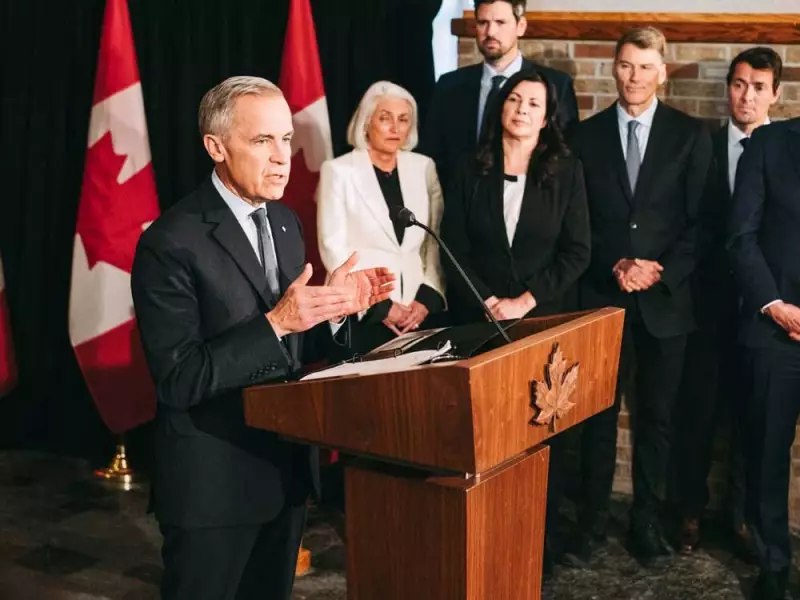
Prime Minister Mark Carney delivered another high-profile speech on Thursday, this time in Quebec City, where he praised Canada's societal and economic achievements while preparing for the upcoming Liberal cabinet retreat. The address, which occurred just days after his well-received appearance at the World Economic Forum in Davos, Switzerland, has drawn criticism from editorial voices calling for less rhetoric and more substantive action from the government.
Familiar Themes and Political Clichés Dominate Address
During his Quebec City appearance, Carney employed numerous familiar political clichés in portraying Canada as a beacon of stability and success in an increasingly turbulent global landscape. His speech echoed themes that have characterized prime ministerial addresses dating back to Confederation, emphasizing national pride and resilience while offering broad promises about improving Canadians' quality of life and security.
The Prime Minister's remarks included a pointed response to recent comments from U.S. President Donald Trump, who suggested during his own World Economic Forum speech that Canada's existence depends on the United States. Carney countered this assertion by stating, "Canada doesn't live because of the United States. Canada thrives because we are Canadian."

Editorial Criticism Highlights Growing Impatience
An editorial response to the speech expressed understanding for Carney's desire to inspire Canadians during ongoing trade tensions with the United States and what it described as "a continuous stream of insults from the Trump White House." However, the editorial emphasized that the time for speeches has passed and concrete action is now urgently needed.
Critics note that while Carney has initiated some policy measures including a modest tax reduction, several relatively minor non-U.S. trade agreements, and proposed safety legislation, these represent only initial steps toward fulfilling broader campaign promises. The government faces the challenge of passing numerous initiatives through Parliament within what Carney has described as "record time," raising questions about implementation feasibility.
Political Strategy and Communication Concerns Emerge
Some political observers speculate that Carney's approach may involve attempting to attract additional Conservative or opposition MPs to join the Liberal ranks, potentially transforming the current strong minority government into a razor-thin majority. This strategic consideration adds complexity to the government's legislative agenda and timeline.
Concerns have also been raised about Carney's limited availability for media questioning following his Davos appearance. The editorial suggests this avoidance stems from anticipated questions about how the government plans to achieve its ambitious promises within the compressed timeframe it has established for parliamentary action.
As Parliament prepares to reopen on Monday, the Carney government faces increasing pressure to translate inspirational rhetoric into tangible policy achievements that address Canadians' concerns about cost of living, economic security, and international relations during a period of global uncertainty.