MSNBC Host Voices Grave Concerns About America's Global Standing Under Trump
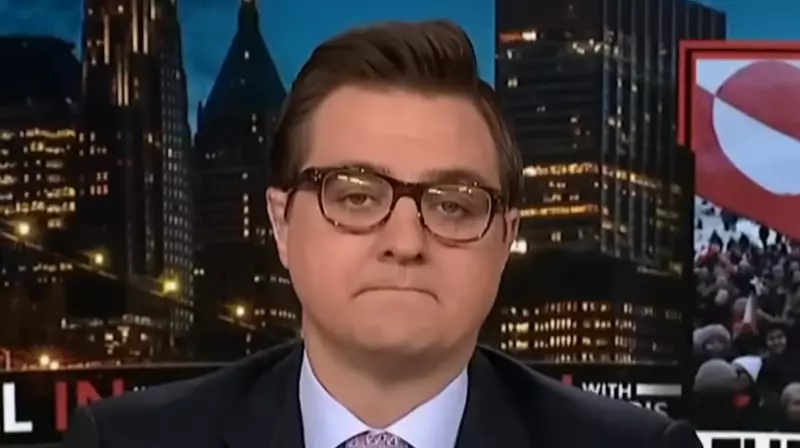
During Tuesday's episode of "All In," MSNBC host Chris Hayes articulated a growing fear that many Americans have likely been contemplating but hesitant to express publicly. Hayes offered a candid assessment of how the international community is probably viewing the United States under President Donald Trump's leadership, particularly during the president's aggressive campaign to acquire Greenland from Denmark.
"Maybe we're the bad guys," Hayes stated bluntly, capturing the essence of his troubling analysis. The political commentator elaborated that America's traditional allies "are becoming aware that the most powerful person in the world is a danger and threat to it, and making the world order unstable." Hayes concluded this sobering thought with the warning that "that means we're all in a lot of trouble."
Trump's Greenland Obsession Raises International Alarms
Despite clear expressions of disinterest from both Greenlandic and Danish leadership regarding any territorial transfer, President Trump's fixation on acquiring Greenland continues to escalate concerns among international observers. The president has justified this pursuit using national security arguments while simultaneously threatening several European nations with tariffs until the United States secures what he calls "the Complete and Total purchase" of the autonomous Danish territory.

The situation intensified recently when Trump sent a revealing text message to Norwegian Prime Minister Jonas Gahr Støre. In this communication, the president expressed anger toward the Norwegian Nobel Committee for declining to award him the Peace Prize he has long sought. More disturbingly, Trump indicated he no longer feels constrained by "an obligation" to prioritize peace in his decision-making.
"Considering your Country decided not to give me the Nobel Peace Prize for having stopped 8 Wars PLUS, I no longer feel an obligation to think purely of Peace," Trump wrote. "Although it will always be predominant, but can now think about what is good and proper for the United States of America."
Historical Parallels and Global Order Concerns
Hayes deepened his analysis by drawing troubling historical comparisons, suggesting the United States now resembles "an Axis power" more than the Allied power it was during World War II. The MSNBC host specifically referenced Nazi Germany in his comparison, emphasizing how America's current trajectory under Trump represents a fundamental shift in global dynamics.
"Americans electing Donald Trump is not just our problem," Hayes asserted. "We have made it the world's problem because we have made ourselves the center of the global order. And the post-World War II global order has been predicated basically on U.S. hegemony."
While acknowledging that some Americans view the past eight decades of U.S. global dominance with "gauzy nostalgia," Hayes stressed the importance of maintaining a "clear-eyed" perspective about how America has "egregiously" abused that power "in many circumstances in awful, bloody and unforgivable ways, from Vietnam to Iraq and beyond."
The Fragility of Post-War Stability
Despite these historical flaws, Hayes noted that the global system established after World War II has functioned effectively as a "world war avoidance machine with the U.S. at the center." He acknowledged this system "has done a lot of bad things, but it has succeeded in that singular goal" of preventing another global conflict.
The commentator argued that Trump's behavior fundamentally betrays what he called the "big lesson of World War II" – specifically that "autocratic regimes, expansionist empires and fascists will create world war."
"And what we are dealing with today is what happens when the winners of World War II, one of them, realized the order they built is crumbling and that the global hegemon is sounding and maybe acting now like an Axis power," Hayes concluded, painting a portrait of a world order in dangerous transition under American leadership that increasingly alarms both domestic critics and international observers.