Congress Moves to Reverse Controversial Senator Damages Provision
WASHINGTON — In a dramatic reversal of legislative fortunes, Congress is poised to repeal a controversial new law that would have allowed certain U.S. senators to claim millions of dollars in damages from the Justice Department. This action represents a significant victory for House Republicans, who were outraged when their Senate counterparts quietly inserted what many view as a personal financial windfall into critical government funding legislation.
Revenge for House Republicans
The contentious provision was originally slipped into the government funding bill that ended the longest government shutdown in American history last fall. House Republicans felt they had been forced into an impossible position at the time.
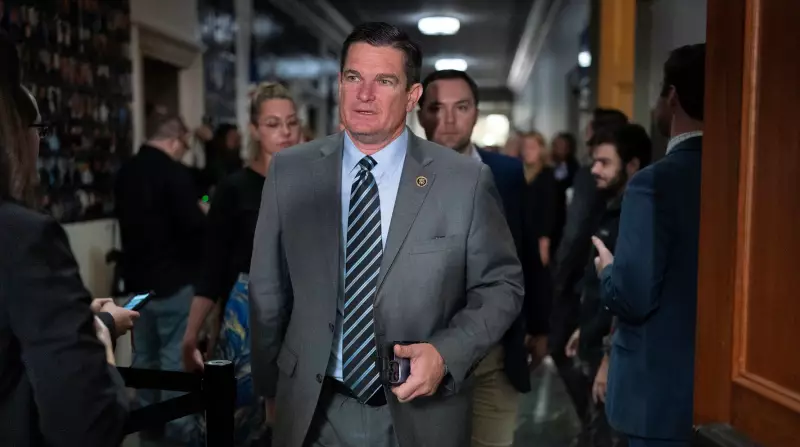
"Several weeks ago now, the Senate sent us legislation at the last minute that had we rejected it and sent it back, the government would have stayed shut down," explained Representative Austin Scott, a Republican from Georgia. "We're in a similar position, only it's reversed now."

The Controversial Law at Issue
The law in question created a unique privilege exclusively for senators, permitting them to file claims for at least $500,000 in damages if the Justice Department used subpoenas to obtain their phone records without providing proper notification to their offices. This provision emerged after senators discovered last year that former special counsel Jack Smith had obtained several of their phone records during his investigation into former President Donald Trump's efforts to overturn the 2020 election results.
On Thursday, House Republicans attached the repeal measure to a must-pass appropriations package. The Senate must now approve this bill when it returns from recess next week. Failure to do so would likely trigger another government shutdown, though this would be a partial shutdown affecting only certain agencies beginning January 30.
Political Tensions and Constitutional Concerns
Republicans have consistently accused Smith of overstepping constitutional boundaries and engaging in what they characterize as "spying" on lawmakers, despite the fact that the obtained records only revealed the timing of calls rather than their actual content. Coincidentally, during testimony on Thursday, Smith provided his rationale for the investigative actions.
"We had evidence that the president had directed Rudy Giuliani, one of his co-conspirators, to contact members of Congress to try to further delay the proceedings and exploit the violence that happened in the Capitol," Smith told the House Judiciary Committee. "We had evidence that those calls had happened. We wanted to get more evidence of that, to corroborate it for trial."
Widespread Disavowal and Criticism
Most senators have publicly distanced themselves from the payout provision, which was added to the government funding bill by Senate Majority Leader John Thune, a Republican from South Dakota, with the consent of Democratic Senator Chuck Schumer of New York. Only Senator Lindsey Graham, a Republican from South Carolina, has indicated he would file a claim and potentially receive millions of dollars from the Justice Department.
Representative Scott and other House Republicans expressed disgust upon learning about the provision, characterizing it as an obvious self-enrichment scheme. Despite generally supporting Trump's claims about the January 6 events, they unanimously added the repeal to the crucial funding bill on Thursday.
"There were no public hearings on it. It should be reversed," Scott declared on Thursday. "If they think that what they did is good policy and should be the law, then they should have an open debate and an open hearing on it and a vote on it."
Support for Repeal and Political Uncertainty
Senator Martin Heinrich, a Democrat from New Mexico who has been a leading critic of the senators-only damage awards, welcomed the House's decisive action.
"This is a wrong-headed cash grab, and the Senate needs to end it next week," Heinrich stated emphatically.

However, Representative Greg Steube, a Republican from Florida who was so angered by the original provision that he voted against the government funding bill last fall, expressed skepticism about whether the Senate would actually vote to repeal the measure when lawmakers return to Washington next week.
"I don't know if the Senate is going to take it up," Steube admitted. "They could strip it off and send it back. The Senate can do all sorts of different stuff."
The coming week will determine whether this controversial provision remains law or becomes a brief footnote in congressional history, with significant implications for government funding and inter-chamber relations.