Conservatives Demand Parliamentary Vote on Any Canadian Military Role in Iran
The Conservative Party of Canada is intensifying its call for a formal parliamentary vote on any potential Canadian military involvement in the escalating conflict between the United States, Israel, and Iran. This demand comes as the party simultaneously accuses Prime Minister Mark Carney of flip-flopping on critical foreign policy positions, creating uncertainty regarding Canada's international stance.
Escalating Tensions in the Middle East Prompt Political Response
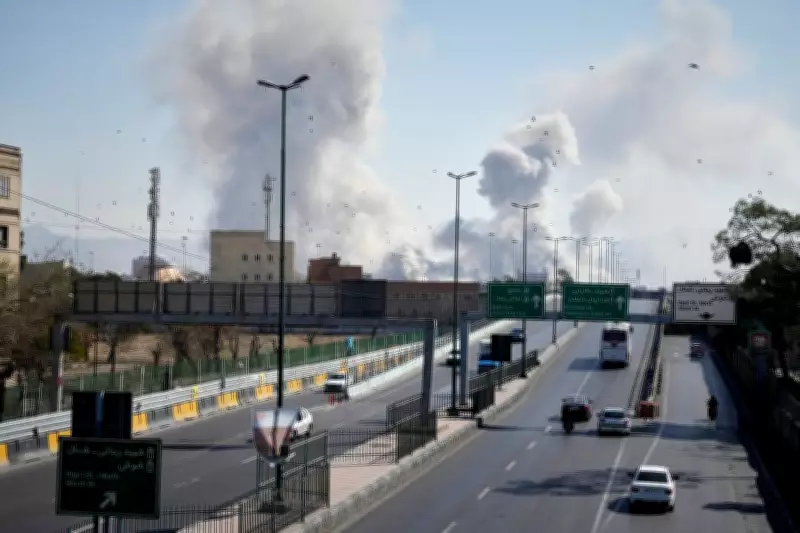
Recent airstrikes in Tehran, part of a joint U.S.-Israeli military campaign, have heightened global tensions and sparked a fierce domestic political debate in Ottawa. The Conservatives argue that any decision to commit Canadian forces or resources to the Iran conflict must be subject to rigorous democratic scrutiny through a vote in the House of Commons. They emphasize that such a significant commitment requires the explicit consent of elected representatives, not just executive decision-making.
"The potential for Canadian military engagement is a matter of grave national importance," a Conservative spokesperson stated. "Parliament must have its say. We cannot allow our nation's role in an international conflict to be decided without transparent debate and a clear mandate from the people's representatives."

Accusations of Inconsistency Leveled Against Prime Minister Carney
Parallel to the call for a vote, the opposition has launched sharp criticism against Prime Minister Mark Carney, accusing him of inconsistent and contradictory statements on foreign policy. The Conservatives point to what they describe as a pattern of flip-flopping, particularly regarding international trade agreements and military alliances, which they argue undermines Canada's credibility on the world stage.
"Prime Minister Carney's so-called 'middle power doctrine' is facing its first major test, and the confusion is palpable," said Eric Ham, a political analyst cited in the debate. "His administration's messaging on Iran, trade with the U.S., and broader security commitments has been erratic, leaving allies and citizens uncertain of Canada's direction."
The criticism extends to Carney's recent comments on the Canada-United States-Mexico Agreement (CUSMA), which he labeled as 'broken' due to U.S. tariffs, prompting Intergovernmental Affairs Minister Dominic LeBlanc to schedule urgent talks in Washington. Conservatives argue this episode exemplifies a reactive and unstable foreign policy approach.
Broader Context of Regional and Domestic Concerns
The political maneuvering occurs against a backdrop of significant regional escalation. Attacks on commercial tankers and rising global gas prices, directly linked to the Middle East conflict, are compounding economic anxieties. Domestically, the situation is further complicated by NORAD reports of Russian military aircraft detected near Alaska, highlighting broader North American security concerns.
The Conservative push for a parliamentary vote is framed not only as a procedural necessity but as a corrective to perceived executive overreach. They contend that a transparent debate would force the government to clearly articulate its strategic objectives, potential risks, and exit strategies regarding Iran, ensuring accountability to the Canadian public.
As the situation develops, the demand for a vote and the accusations of flip-flopping are likely to dominate parliamentary discourse, shaping Canada's response to one of the most volatile international crises in recent years. The outcome could define Prime Minister Carney's foreign policy legacy and set a precedent for how military engagements are authorized in the future.