Cuba Confronts Dual Challenges: Power Restoration and U.S. Demands for Market Reforms
As electricity gradually returns to Cuban households following a devastating nationwide blackout, the island nation finds itself under renewed and intense pressure from the United States to implement sweeping free market economic reforms. The complete electricity system failure that occurred on Monday has starkly illuminated the precarious and deteriorating state of Cuba's economy, creating a critical juncture for the communist government.
U.S. Officials Escalate Calls for Substantial Economic Changes
U.S. Secretary of State Marco Rubio, a prominent Cuban-American critic of the island's ruling party, publicly declared that recent Cuban announcements regarding exile investment and business ownership represent insufficient progress. "What they announced yesterday is not dramatic enough. It's not going to fix it. So they've got some big decisions to make," Rubio stated during a White House briefing with reporters. His comments came as Washington openly reaffirmed its objective to conclude the nearly seven-decade standoff with the one-party communist state.
President Donald Trump reinforced this position, telling journalists, "We'll be doing something with Cuba very soon." Earlier, Trump had made even more direct statements about his intentions toward the Caribbean nation, asserting, "I do believe I'll be... having the honour of taking Cuba," and describing the country as "a very weakened nation right now."

Electricity Crisis Exposes Economic Vulnerability
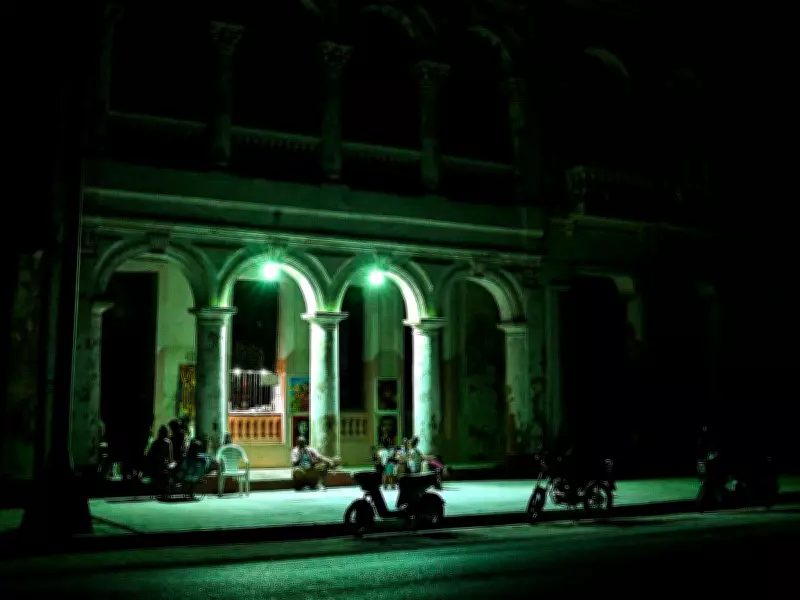
The total electricity breakdown on Monday served as a powerful demonstration of Cuba's economic fragility. By early Tuesday, power had been restored to approximately two-thirds of the country, including 45 percent of the capital Havana, home to 1.7 million residents. However, this incident represents merely the latest manifestation of chronic energy problems plaguing the island.
Cuba's aging electricity generation infrastructure has deteriorated to a state of complete disarray, with daily power outages lasting up to twenty hours becoming routine in certain regions. The system suffers from severe fuel shortages necessary for power generation, a situation exacerbated by recent geopolitical developments.
Compounding Crises: Venezuela's Fall and U.S. Oil Blockade
Cuba's economic challenges have multiplied following the U.S. military operation that removed Venezuela's socialist leader Nicolas Maduro in January. Venezuela had served as Cuba's primary regional ally and oil supplier, and its loss has created devastating consequences for the island's energy security.
Since January 9, no oil imports have reached Cuban shores due to what effectively constitutes a U.S. oil blockade. This restriction has crippled the power sector while simultaneously forcing airlines to reduce flights to the island, dealing a significant blow to Cuba's crucial tourism industry.
Daily Struggles for Cuban Citizens
For ordinary Cubans, the electricity crisis translates into constant anxiety about basic necessities. "What we fear all the time is that the blackout will drag on and we will lose the little bit that we have in the fridge, because everything is so expensive," explained Olga Suarez, a 64-year-old retiree. She added, "Otherwise, we are used to it because here almost all the time you go to bed and wake up without electricity."
Adding to the nation's troubles, a 5.8-magnitude earthquake struck off Cuba's coast early Tuesday, though no immediate casualties or damage were reported.
Broader Implications and Future Uncertainties
The convergence of infrastructure collapse, economic pressure, and geopolitical tension places Cuba's government in an increasingly difficult position. As the country works to stabilize its power grid, it must simultaneously navigate Washington's escalating demands for economic liberalization. The situation represents a critical test for Cuba's leadership and its ability to maintain stability amid compounding domestic and international pressures.

With the Trump administration explicitly stating its desire to see the Cuban government fall, and with the island's economy reeling from multiple shocks, the coming months will likely determine whether Cuba can implement sufficient reforms to satisfy international critics while preserving its political system.