Eleanor Holmes Norton Ends Re-Election Bid, Likely Concluding Decades of Service
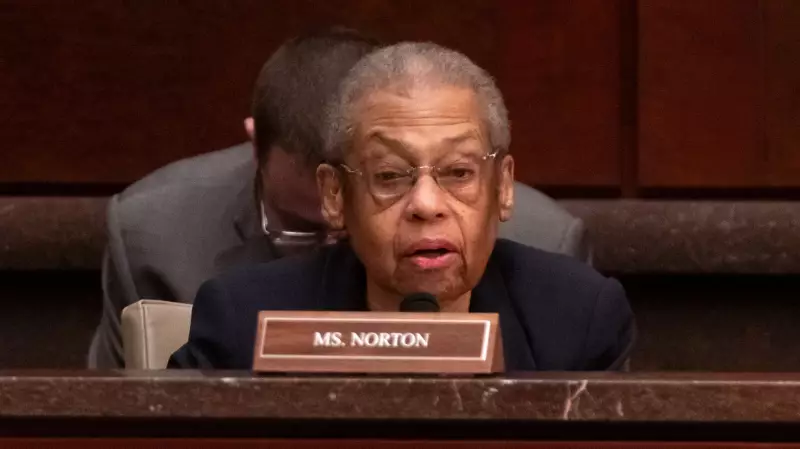
Eleanor Holmes Norton, the 18-term delegate representing the District of Columbia in Congress and a distinguished veteran of the Civil Rights Movement, has officially filed paperwork to terminate her campaign for re-election. This move signals the probable conclusion of a remarkable career in public service that has spanned over three decades. Norton, who is 88 years old, has served as the sole congressional representative for the residents of the nation's capital since 1991, advocating tirelessly for their interests on the federal stage.
Political Context and Retirement Announcement
The decision comes at a time when Norton faced increasing scrutiny regarding her effectiveness, particularly following the Trump administration's extensive interventions into Washington, D.C., last year. These interventions included the federalization of the local police force, the deployment of National Guard troops from multiple states and the federal district across the capital's streets, and a surge of federal agents from the Department of Homeland Security into neighborhoods. These actions sparked significant outcry, protests from residents, and a lawsuit from the district's attorney general, raising questions about Norton's ability to navigate such challenges.
Norton's campaign filed a termination report with the Federal Election Commission on Sunday, as first reported by NOTUS. While her office has not released an official statement about her intentions, this filing strongly indicates her retirement from electoral politics. In response, Mayor Muriel Bowser congratulated Norton on her retirement, praising her as a "Warrior on the Hill" whose work reflects the city's relentless fight for equal representation.

Legacy and Impact on Washington, D.C.
As the district's delegate, Norton does not hold a formal vote in the House of Representatives, but she has been a formidable advocate through other means. Known for her staunch support of D.C. statehood and the labor rights of federal workers in the region, she secured bipartisan victories for residents. Notably, Norton was instrumental in passing legislation that allows D.C. residents to attend public colleges nationwide at in-state tuition rates or receive grants for private universities. In the 1990s, she played a key role in resolving the city's financial crisis by negotiating a deal to transfer billions in unfunded pension liabilities to the federal government.
Her retirement opens up a likely competitive Democratic primary in the overwhelmingly Democratic city, with several local lawmakers already announcing their intentions to run. This development occurs amid a historically high number of House members not seeking re-election this year, with more than one in ten opting out.
Civil Rights Roots and Personal Journey
Norton's career is deeply rooted in the Civil Rights Movement. Born and raised in Washington, D.C., she was educated at Dunbar High School as part of its last segregated class, an experience she credits with shaping her race and civil rights consciousness. She attended Antioch College in Ohio and, in 1963, balanced her studies at Yale Law School with organizing work in Mississippi during the Freedom Summer. Tragically, civil rights icon Medgar Evers, who picked her up at the airport that summer, was assassinated the same night.
Norton also helped organize and attended the 1963 March on Washington, which she described as "the single most extraordinary experience of my lifetime" in a 2023 interview with The Associated Press. Her career milestones include becoming the first woman to lead the Equal Employment Opportunity Commission, enforcing anti-discrimination laws in the workplace, before entering politics when her predecessor retired to run for mayor.
As an institution in Washington politics for decades and the oldest member of Congress, Norton's departure marks the end of an era, leaving a legacy of advocacy and resilience that has defined her tenure and inspired many in the fight for justice and representation.