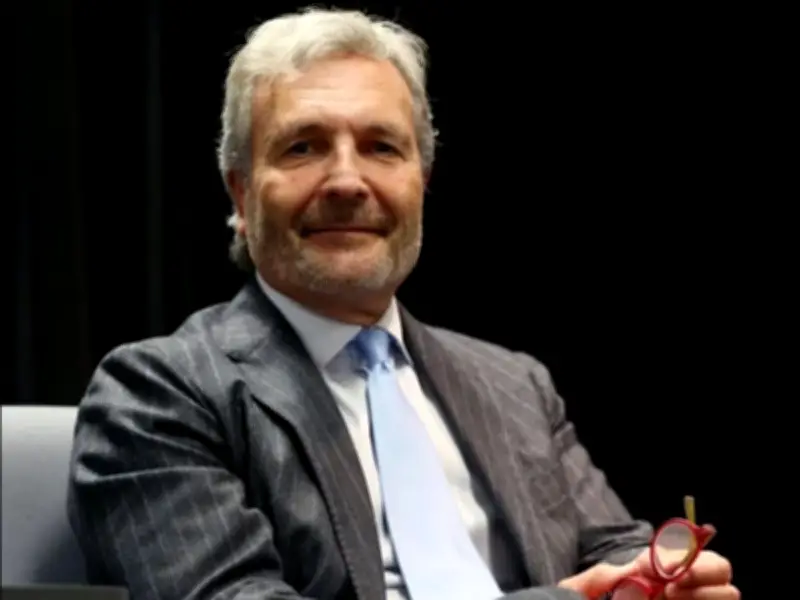
Chief Justice Glenn Joyal of the Manitoba Court of King's Bench, recently appointed to the Supreme Court of Canada, has drawn praise from conservatives as a restraint on judicial activism. However, his record reveals a embrace of identity politics, including a mandatory pronoun policy for lawyers and support for a 'tri-jural' legal system elevating Indigenous law to co-equal status with Canadian law.
Pronoun Policy in Manitoba Courts
In 2021, Joyal made Manitoba one of the first provinces to require lawyers to state pronouns when introducing themselves or clients in court. A 2021 order signed by Joyal states: 'At the beginning of any in-person or virtual proceeding when parties or counsel are introducing themselves, their client, a witness, or another person, they should provide the judge or justice with each person’s name, title (e.g. “Mr./Ms./Mx./Counsel Jones”) and the correct pronouns to be used in the proceeding.' If a lawyer refuses, 'they will be prompted by the court clerk to provide this information.'
In his questionnaire to the Supreme Court review body, Joyal cited this measure as evidence of his 'considerable' efforts to 'promote gender equality and a broader diversity of peoples in our justice system and in our courts.' He wrote: 'Under my leadership and that of the other Manitoba chiefs, we were amongst the first courts to formalize a gender inclusive pronoun policy for all court proceedings and practice.'

Advocacy for 'Tri-Jural' System
On Indigenous reconciliation, Joyal has been explicit in advocating for special treatment of Indigenous people within the Canadian court system. Starting in 2019, he oversaw the introduction of Indigenous cultural practices into Manitoba courtrooms, including Métis jig dances and smudging ceremonies.
Joyal seeks a 'tri-jural' system where Indigenous law is co-equal with Canadian civil and criminal law, arguing that courts should 'make space' for Indigenous legal norms to overrule Canadian ones. This stance has drawn criticism from those who view it as a form of identity politics that undermines legal uniformity.
Conservative Praise and Criticism
Despite these positions, Joyal has been praised by conservative figures. Legal scholar Yuan Yi Zhu called him an 'excellent jurist' with a 'nuanced understanding of the judicial role.' Ben Woodfinden, former communication director for Conservative Leader Pierre Poilievre, described Joyal in the National Post as 'a judge who thinks judges have become too powerful.'
However, his pronoun policy and tri-jural advocacy suggest that even this 'restrained' judge has a weakness for identity politics, challenging the narrative of a purely conservative appointment.