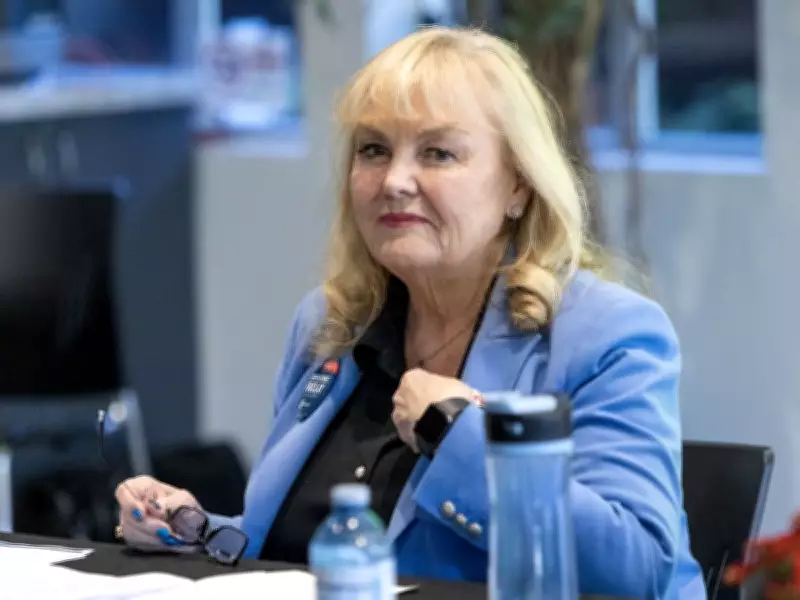
In the closing passage of her victory speech, former Conservative MP Kerry-Lynne Findlay signaled a deeper affiliation with social conservatism than any right-of-centre leader since Bill Vander Zalm. She won the B.C. Conservative Party leadership on a narrow fourth ballot, positioning herself as the true conservative candidate.
Campaign Strategy and Victory
Findlay’s campaign literature warned against B.C. Liberal insiders attempting to take over the Conservative party. She stated, “B.C. Liberal insiders are trying to take over the Conservative party of B.C. They want to steal the Conservative name and push the same hidden liberal agenda. Let me be clear: Liberals are not taking over our Conservative party. Not on my watch.”
Findlay triumphed over former B.C. Liberal MLA Peter Milobar and former B.C. Liberal cabinet minister Iain Black in early counts. On the final ballot, she defeated Caroline Elliott, whose political roots were in the B.C. Liberal and B.C. United parties.

Final Ballot Dynamics
Elliott started five percentage points behind Findlay and closed to within two on the final ballot due to second and third choices from supporters of eliminated candidates. However, as often happens with preferential balloting, the candidate leading on the first count held on to win.
Elliott supporter Bryan Breguet noted her meagre first ballot showing of 25 per cent despite raising $1.8 million, the most of any candidate. He blamed her decision to skip the April 8 leadership debate staged by Juno news, a right-leaning agency. “Given how close it was, I believe it is an absolute certainty that not attending the Juno debate cost Elliot the leadership,” Breguet wrote on X. A second factor was her hiring of Kory Teneycke, a Conservative strategist from Ontario.
Debate Controversy
Findlay, who attended the Juno debate alongside Black and candidate Yuri Fulmer, capitalized on Elliott’s absence. At the last debate on Global TV, Findlay took a controversial shot at Milobar, challenging him over a possible conflict of interest because his wife and children are Indigenous. When asked about the accusation, Findlay replied, “I did not accuse him. I asked him a question.”
The transcript shows Findlay said: “The property-rights issue is overlying all of this, and Mr. Milobar, I do not see how, on the major issue of our time, you will be able to get around the conflict-of-interest rules.” Milobar responded: “Just say it. My wife’s Indigenous, so you think I’m in conflict of interest. I’ve never heard of anything so ridiculous in my life.”
The exchange did not generate sympathy for Milobar in the voting; he finished last. However, it raised questions about whether he could work with Findlay. She said Saturday that she could, and Milobar told Kamloops Radio CFJC reporter Michael Reeve the same.