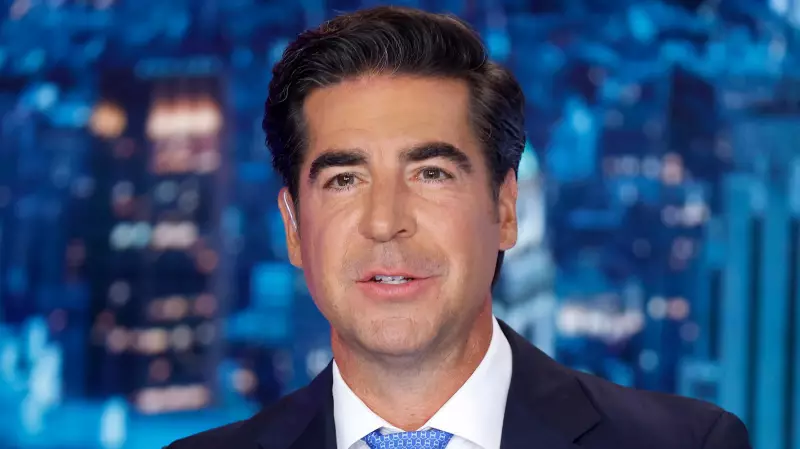
Fox News personality Jesse Watters has ignited controversy by referring to former President Donald Trump as "Daddy" during a segment advocating for U.S. acquisition of Greenland. This places him among a growing cadre of conservative commentators and politicians using the informal moniker, a move that coincides with renewed diplomatic friction over the autonomous Danish territory.
The 'Daddy' Moniker and NATO Demands
During Wednesday's broadcast of The Five, Watters framed Trump's persistent interest in Greenland as a simple matter of getting what he wants. "NATO called Trump 'Daddy.' Why won't they give Daddy what he wants?" Watters questioned. His remark pointedly referenced NATO Secretary-General Mark Rutte, who used the same term in a conversation with Trump during last year's NATO Summit in The Hague, Netherlands.
Rutte, however, is far from alone in employing the nickname. Republican Representatives Lauren Boebert of Colorado and Byron Donalds of Florida have publicly embraced it on social media and in appearances. Actor and conservative voice Mel Gibson also followed suit. Watters himself previously praised Trump's "dad strength" in July, a comment made amid media scrutiny of the 79-year-old former president's physical condition.

Greenland Grab Rekindles Transatlantic Strain
The core of Watters' commentary revolved around Trump's long-standing ambition to bring Greenland under American control. This proposition is not taken lightly by U.S. allies in Europe. In a direct response to the perceived threat, Germany, France, Norway, and Sweden have this week deployed troops to the Arctic island in a demonstrative show of support for Denmark.
The military maneuver underscores the serious diplomatic tensions triggered by what many see as a dismissive attitude toward a sovereign nation and longtime partner. On the same Fox News panel, Democratic strategist and co-host Jessica Tarlov countered Watters' stance, emphasizing "the lack of respect" shown to Denmark. "Sometimes Daddy needs to be told no," Tarlov stated. "That's just the facts on the table."
A Pattern of Provocative Rhetoric
The incident highlights how the blending of provocative political nicknames with substantive foreign policy disputes can amplify international discord. The use of "Daddy" by figures like Watters, while intended as a display of loyalty or strength, is perceived by critics as undermining the gravity of discussions about territorial sovereignty and alliance integrity.
As European nations solidify their defensive posture in the Arctic, the rhetorical battle on American cable news continues to fuel a debate that extends far beyond political branding into the realm of global diplomacy and security.