Lindsey Graham's Call for Escalation in Iran War Draws Widespread Condemnation
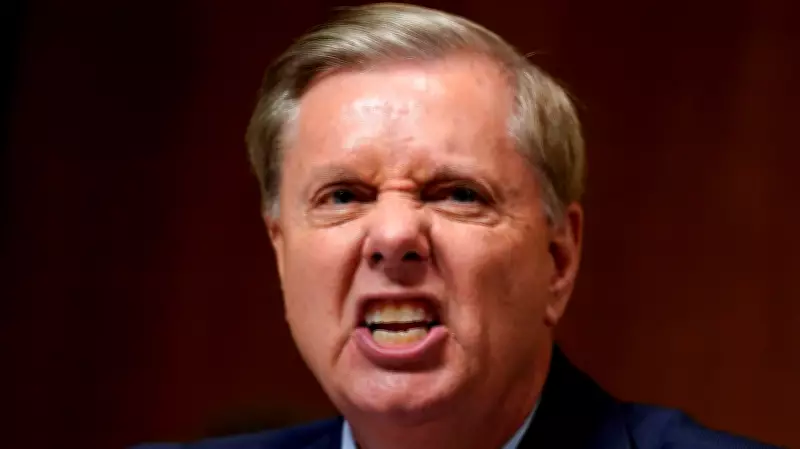
Senator Lindsey Graham, a Republican from South Carolina, is under intense scrutiny after advocating for a significant escalation in the U.S.-Israeli conflict with Iran. In a recent interview on Fox News, Graham urged President Donald Trump to seize Kharg Island, a critical hub that manages approximately 90% of Iran's oil exports. This proposal has ignited a firestorm of criticism from various quarters, highlighting the potential dangers and ethical concerns of such a military move.
Graham's Controversial Remarks and Historical Comparison
During the interview with host Shannon Bream, Graham dismissed warnings from a The Atlantic article, which cautioned that capturing and holding Kharg Island could lead to severe consequences. The article predicted that American troops stationed there would face threats such as ballistic-missile strikes, drone attacks, and exposure to petrochemical smoke, all while struggling with logistical support challenges. Graham responded with defiance, stating, "I'm sorta tired of all this armchair quarterbacking," and expressed his unwavering confidence in the U.S. Marines over the article's author.
He drew a direct parallel to the Battle of Iwo Jima, asserting, "We did Iwo Jima. We can do this. The Marines. My money's always on the Marines." This comparison has proven particularly contentious, as the Battle of Iwo Jima, fought in the final year of World War II, resulted in nearly 7,000 U.S. Marine fatalities and 20,000 wounded over a brutal 36-day period. The National World War II Museum has described it as one of the bloodiest conflicts in Marine Corps history, making Graham's analogy a focal point for outrage.

Outpouring of Criticism from Public Figures and Observers
The backlash to Graham's comments has been swift and severe, with critics condemning his stance as reckless and insensitive. Many have taken to social media to voice their disapproval, emphasizing the human cost of war and questioning the motives behind his proposal.
- Fred Wellman, a political commentator, tweeted, "Lindsey didn't take Iwo Jima. He's sending our kids to die for oil. Period. This man is a monster." This sentiment echoes widespread concerns that Graham's push for military action is driven by economic interests rather than national security.
- Mike Rothschild highlighted the historical context, noting that the deadliest battle for U.S. troops since Vietnam saw only about one percent of the casualties suffered at Iwo Jima. He described Graham's desire to "do" something similar as "a ghoulish bloodthirsty fever we haven't seen in America in generations."
- Representative Jason Crow, a Democrat from Colorado, challenged Graham's use of the word "we," stating, "No, Lindsey, 'we' didn't do Iwo Jima. Almost 7,000 Americans who died and 19,000 who were wounded did Iwo Jima." Crow emphasized that those sacrifices were made for freedom with broad public support, unlike the current proposal.
- Andrew Revkin expressed frustration with the casual use of "we" in war discussions by older politicians, calling it "utterly infuriating."
- Other critics, including Marty Bent and Alex Jacquez, labeled Graham a "psychopath" and accused him of regularly proposing ways to send young people to their deaths on national television.
Further criticism came from individuals like Jeet Heer, who questioned the morale of U.S. soldiers potentially deployed in such a conflict, and Kein Mensch Kein Tier, who pointed out that many Americans may not fully grasp the horrors of Iwo Jima, allowing for such comparisons to go unchallenged. Edward Feser offered a restrained critique, praying for repentance, while Travis Yost sarcastically suggested that Graham should "lead from the front" if he is so committed to the cause.

Broader Implications and Ongoing Debate
This incident underscores deep divisions in U.S. foreign policy and the ethical considerations of military intervention. Graham's advocacy for seizing Kharg Island is part of a broader pattern of hawkish stances on Iran, which have been met with both support and opposition. The comparison to Iwo Jima has particularly resonated, serving as a stark reminder of the sacrifices made by service members and the gravity of decisions that could lead to similar losses.
As the debate continues, Graham's remarks have sparked a national conversation about the role of military force, the responsibility of political leaders in advocating for war, and the importance of honoring historical sacrifices. Critics argue that such rhetoric trivializes the experiences of veterans and could pave the way for unnecessary conflicts, while supporters may view it as a strong stance against adversarial nations. The fallout from this controversy is likely to influence discussions on U.S.-Iran relations and military strategy in the coming months.