House Approves Homeland Security Funding With Limited Immigration Enforcement Restrictions
The House of Representatives passed legislation on Thursday to fund the Department of Homeland Security, providing substantial resources to immigration enforcement agencies while imposing few meaningful constraints on their operations. The bill, which now moves to the Senate, has exposed significant fractures within the Democratic Party as lawmakers grapple with balancing practical governance concerns against moral objections to current immigration enforcement tactics.
Substantial Funding for Enforcement Agencies
The legislation allocates $10 billion to Immigration and Customs Enforcement and $18 billion to Customs and Border Protection. These agencies have conducted extensive operations across multiple states, including Minnesota and Maine, deploying thousands of federal agents in sweeping raids. This funding comes in addition to the unprecedented $75 billion increase ICE received through last year's Republican-backed legislation.
Democratic efforts to include specific restrictions on ICE tactics were unsuccessful during bicameral negotiations. Proposed requirements for agents to obtain warrants before detaining immigrants and follow standardized use-of-force policies were blocked by Republican negotiators. These provisions might have prevented incidents like the fatal shooting of Renee Good by an ICE agent in Minneapolis.

Democratic Division Over Enforcement Tactics
The vote revealed deep divisions within Democratic ranks, with seven Democrats joining nearly all Republicans to approve the measure. Representative Ilhan Omar of Minnesota voiced strong opposition, stating that ICE operations have created terror in communities across her state and beyond.
"It is unjustifiable to shoot an American citizen in the face, to have masked men jumping out of unmarked cars asking American citizens for their papers," Omar told reporters. "This is not just happening in Minneapolis, it's happening across Minnesota, and we cannot normalize this terror that our communities are feeling."
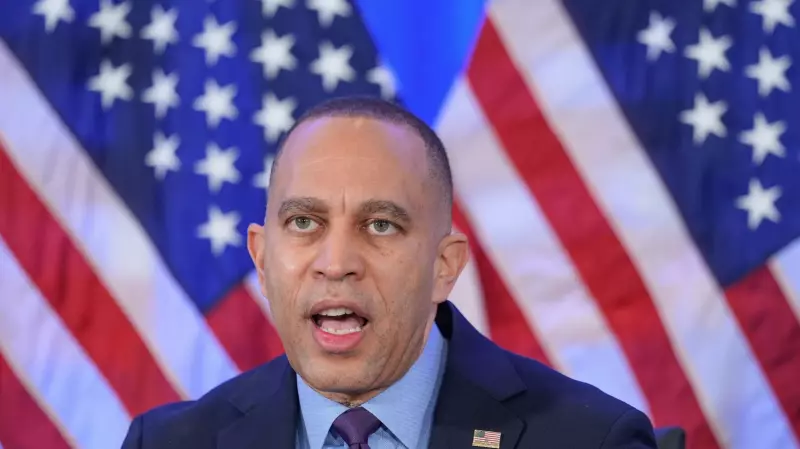
House Minority Leader Hakeem Jeffries of New York declined to formally "whip" the bill, allowing moderate and frontline Democrats to vote according to their conscience. Those supporting the legislation included representatives from competitive districts where opposing the bill could provide ammunition for Republican challengers in upcoming midterm elections.
The Shutdown Dilemma and Limited Oversight
Democratic negotiators argued that passing the bill represented the least bad option available. Without approval, a funding lapse would occur on January 30, potentially shutting down popular DHS agencies like the Federal Emergency Management Agency and Transportation Security Administration while ICE operations would continue using previously allocated funds.
Senator Patty Murray of Washington, the top Democrat on the Senate Appropriations Committee, explained the difficult position: "The suggestion that a shutdown in this moment might curb the lawlessness of this administration is not rooted in reality: under a continuing resolution and in a shutdown, this administration can do everything they are already doing — but without any of the critical guardrails and constraints imposed by a full-year funding bill."
The legislation does include some oversight measures, including $20 million for body-worn cameras for ICE and CBP officers, de-escalation training for agents, and training regarding Americans' right to record interactions with enforcement personnel. The bill also establishes additional transparency requirements for agency spending.
Growing Public Disapproval and Senate Prospects
Public opinion appears to be turning against current immigration enforcement approaches. A New York Times/Siena University poll released Thursday found just 40% of voters approving of current immigration policies, with 58% disapproving. Notably, 71% of independent voters believe ICE has gone too far in its enforcement efforts.
Representative Rosa DeLauro of Connecticut, who helped negotiate the bill but ultimately voted against it, highlighted the toxic perception of ICE within Democratic circles: "ICE believes it can act with impunity and is behaving accordingly."

The Senate is expected to consider the DHS funding as part of a larger package covering six other government departments next week, just days before the January 30 deadline. The package will need support from at least eight Democratic senators to overcome procedural obstacles, and appears likely to receive sufficient backing despite progressive opposition.
Senator Angela Alsobrooks of Maryland vowed to oppose the bill regardless, stating: "The Gestapo tactics used by ICE reveal their inhumanity and lack of training. The lawlessness and abject cruelty of this Administration are harming our Country, making us less safe here and across the world."
The legislation's passage through the House represents a significant moment in the ongoing debate over immigration enforcement, revealing both the practical challenges of governing through divided government and the moral dilemmas facing lawmakers as enforcement tactics become increasingly controversial.