Iran's New Supreme Leader Defiantly Orders Strait of Hormuz to Remain Shut
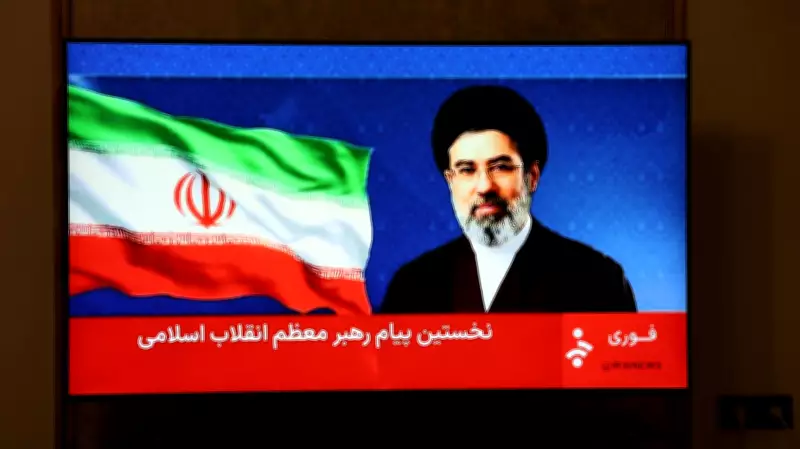
In his first public remarks since succeeding his slain father, Iran's new Supreme Leader Ayatollah Mojtaba Khamenei declared on Thursday that Iran will continue fighting and keep the vital Strait of Hormuz closed as leverage against the United States and Israel. The statement was read out by a state television presenter, as Khamenei has not appeared publicly since an Israeli airstrike at the war's onset that killed much of his family, including his father and wife. Iranian officials have stated he was lightly wounded in the February 28 strikes, though the extent of his injuries remains unclear.
Netanyahu Responds with Veiled Threats and Defense of Military Actions
Hours later, Israeli Prime Minister Benjamin Netanyahu held his first press conference since the war began, issuing a strong statement that included a veiled threat to kill Khamenei. Standing between two Israeli flags and answering questions via video link, Netanyahu defended Israel's military assault on Iran, which has claimed thousands of lives and shaken global energy and stock markets. He remarked, "I wouldn't issue life insurance policies on any of the leaders of the terrorist organization... I don't intend to give an exact message here about what we are planning or what we are going to do."
Escalating Conflict Impacts Global Energy Markets and Security
The ongoing closure of the Strait of Hormuz, through which a fifth of global oil normally passes, has led to significant disruptions. Oil prices surged about 9% to $100 a barrel on Thursday, reversing earlier declines fueled by hopes for a swift end to the conflict. This prospect of prolonged energy supply disruption contributed to a drop in U.S. stocks, with the S&P 500 experiencing its largest three-day percentage decline in a month.

In a show of defiance, two tankers were set ablaze in an Iraqi port after suspected Iranian explosive-laden boats struck them, resulting in at least one crew member death. Images verified by Reuters from Basra, Iraq, showed massive orange fireballs lighting up the night sky. Earlier, three other ships were attacked in the Gulf, with Iran's Revolutionary Guards claiming responsibility for setting a Thai bulk carrier on fire.
Regional Violence Expands with Airstrikes and Rocket Attacks
The war has expanded beyond Iran, with Israeli airstrikes hitting a building in central Beirut on Thursday, sending thick smoke over the Lebanese capital. Israel also ordered residents out of additional areas in southern Lebanon, intensifying its offensive against the Iran-backed Hezbollah group after it launched its largest rocket volley into Israel since the conflict began. So far, the war has killed over 2,000 people, including nearly 700 in Lebanon.
Undermining claims by the U.S. and Israel that they have neutralized much of Iran's long-range weaponry, drones were reported flying into Kuwait, Iraq, the UAE, Bahrain, and Oman. Additionally, a U.S. military refueling aircraft crashed in western Iraq in an incident not attributed to hostile fire, marking the seventh U.S. troop death since strikes against Iran commenced on February 28.
Political and Economic Ramifications Unfold
Iran has stated it will not allow oil to pass through the Strait of Hormuz until U.S. and Israeli attacks cease. However, U.S. President Donald Trump downplayed the impact of higher oil prices, noting on social media that the United States, as the world's largest oil producer, benefits financially from such increases. U.S. Treasury Secretary Scott Bessent indicated that the U.S. Navy, potentially with an international coalition, plans to escort vessels through the strait when militarily feasible.
Inside Iran, residents reported increased security forces presence to demonstrate control, with one Tehran teacher noting, "Security forces are everywhere, more than before. People are afraid to come out, but supermarkets are open." Iran's strategy appears focused on imposing prolonged economic shock to pressure Trump into backing off, with a military spokesperson warning of potential oil prices reaching $200 a barrel. U.S. Energy Secretary Chris Wright expressed skepticism but did not rule out this scenario, emphasizing a focus on military operations.

The conflict continues to evolve, with no immediate signs of resolution, as both sides remain entrenched in their positions, affecting global stability and markets.