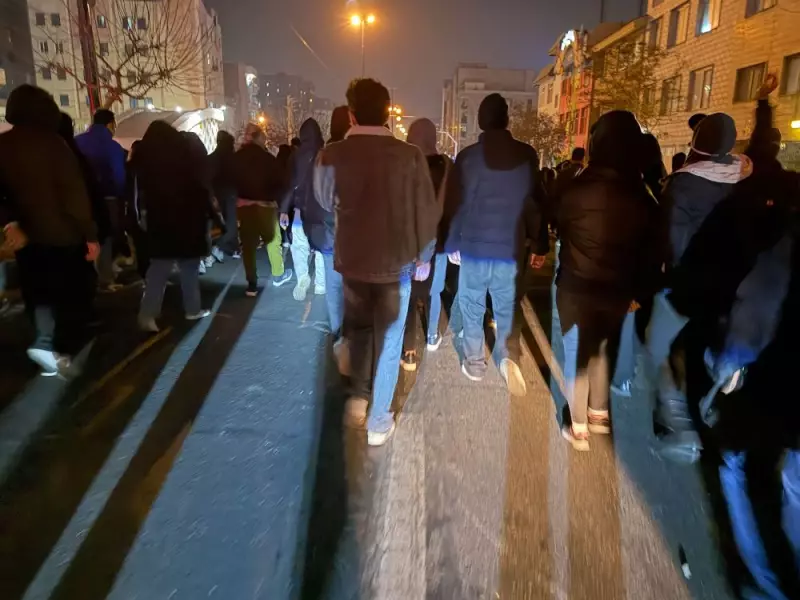
A fresh wave of nationwide demonstrations has once again gripped Iran, presenting images familiar to global audiences: defiant crowds, heavy security deployments, and stern government warnings. Yet, according to analyst Ali Siadatan, these surface similarities mask a profound and decisive transformation in the nature of Iranian dissent. This is not merely another cycle of unrest; it represents a fundamental break from the past.
The Collapse of a Core Assumption
For over four decades, the Islamic Republic has weathered repeated popular uprisings, each met with suppression and deepening public skepticism. Past movements, most notably the Green Movement of 2009, operated under a critical premise: that meaningful reform was possible within the existing theocratic framework. This assumption, Siadatan argues, definitively collapsed in 2022.
The catalyst was the tragic death of Mahsa Amini, a young Iranian Kurdish woman detained by the country's morality police. While such state violence was not new, her killing became the pivotal moment where decades of accumulated grievance tipped into a national revolt. The subsequent protests marked a critical departure. They were no longer appeals to the state for adjustment but represented a broader rejection of the system itself.

A Cultural and Civilizational Reawakening
The unrest since 2022 has evolved into something deeper than political opposition. Siadatan identifies a significant civilizational reawakening taking root among Iranians. This involves a conscious rediscovery of the nation's pre-Islamic heritage and a reclamation of identities long suppressed by the regime's ideological monopoly.
This cultural shift is visible in tangible ways. Visits to ancient Achaemenid sites have surged. Celebrations of Nowruz, the Persian New Year, increasingly incorporate Zoroastrian symbolism, openly defying the state's religious authority. These acts are potent political statements, signaling a societal separation from political Islam as the organizing principle of Iranian life.
Converging Pressures: Economy and Geopolitics
This profound internal transformation did not occur in a vacuum. It has been shaped and accelerated by immense external pressures. A major turning point came in 2018 when the U.S. withdrew from the nuclear agreement, triggering a severe economic collapse. This crisis, combined with demographic shifts, ideological exhaustion, and geopolitical realignment, has created a convergence of challenges unseen since the regime's founding in 1979.
The 1979 revolution severed Iran from much of its historical continuity, imposing an alien ideological system. The current moment, Siadatan contends, is defined by a population actively seeking to reconnect with that severed past, not to reform the present system but to imagine a future fundamentally distinct from it. The context has irrevocably changed, making the current protests a uniquely significant chapter in Iran's modern history.