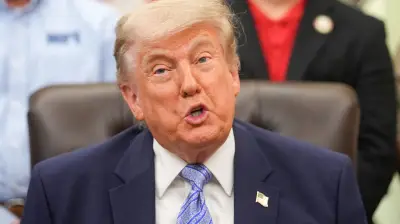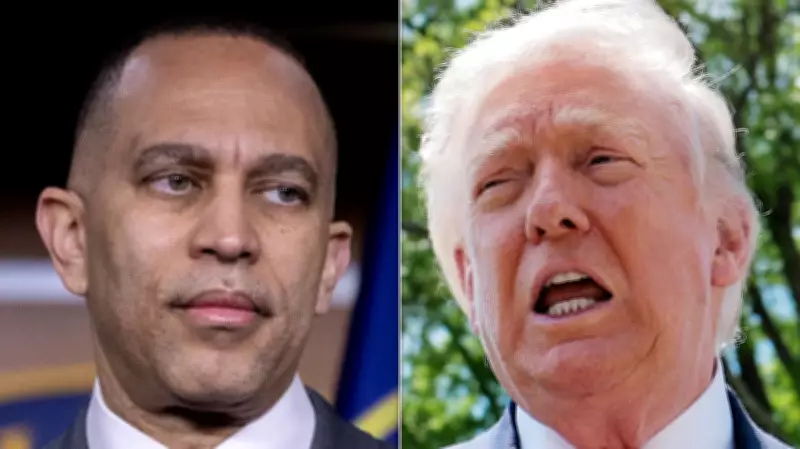
House Minority Leader Hakeem Jeffries, a Democrat from New York, delivered a sharp rebuke to President Donald Trump on Tuesday after the president labeled him a "totally low IQ person." In an interview with MSNBC's Lawrence O'Donnell on "MS NOW," Jeffries turned the tables, asserting that Trump is "clearly the dumbest person ever to sit at 1600 Pennsylvania Avenue."
Trump's Go-To Insult and Jeffries' Response
President Trump has frequently used the phrase "low IQ person" as a preferred insult, often targeting people of color. Just last week, he applied it to his former ally Tucker Carlson, a prominent MAGA supporter. However, Jeffries chose not to linger on what he termed an "extraordinary insult." Instead, he shifted the focus to substantive policy critiques.
Policy Failures Highlighted by Jeffries
Jeffries argued that Trump and his congressional supporters have "completely and totally failed America" across multiple key areas. He detailed these failures, stating, "They failed on the economy, failed on health care, failed on immigration enforcement, and now they've gotten us into a reckless and costly war of choice." He specifically referenced the conflict with Iran, noting that more than a dozen Americans have been killed and approximately 400 others wounded in the hostilities.

Emphasizing the financial toll, Jeffries added, "We're wasting billions of dollars dropping bombs in the Middle East. And these guys won't spend a dime to actually make life more affordable for the American people." This critique underscores broader concerns about resource allocation and domestic priorities under the Trump administration.
Broader Implications and Public Reaction
The exchange highlights the ongoing political tensions and rhetorical battles in Washington. Jeffries' response not only counters personal attacks but also aims to redirect public attention to policy outcomes and national security issues. His comments resonate with critics who question the administration's handling of international conflicts and domestic challenges.
This incident adds to a pattern of contentious interactions between Trump and Democratic leaders, reflecting deeper partisan divides. As the political landscape evolves, such exchanges may influence public discourse and voter perceptions ahead of future elections.