House Speaker Mike Johnson Draws Fire for Defending Trump's Controversial AI-Generated Image
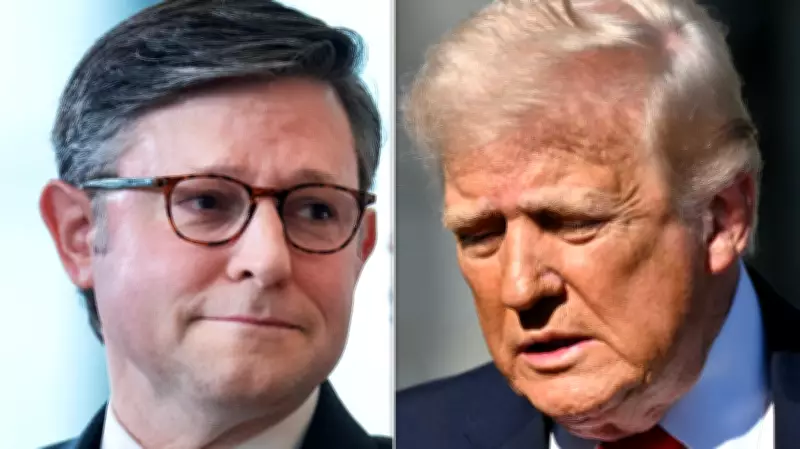
House Speaker Mike Johnson, a Republican from Louisiana, has come under intense online criticism for his attempts to excuse former President Donald Trump after Trump posted an AI-generated image depicting himself as a Christ-like figure. Political science experts have weighed in on what Johnson's refusal to condemn the post reveals about Trump's enduring influence within the Republican Party.
Trump's Social Media Posts Spark Widespread Backlash
The controversy erupted when Trump shared the AI-generated image on his Truth Social platform on Sunday. The image showed the former president wearing a white robe, with light emanating from one hand and apparently healing a sick man with the other. This post was met with condemnation across the political spectrum, including from religious leaders and prominent figures in both the Democratic and Republican parties, even some of Trump's most vocal supporters.
On the same day, Trump also attacked Pope Leo XIV in another post, labeling him "WEAK on Crime." Despite the backlash, Trump later deleted the AI image, telling reporters the following day that he believed it depicted him as a doctor, not as Jesus. However, the damage was done, and the incident highlighted the ongoing tensions between Trump's provocative style and traditional religious sensibilities.

Johnson's Reluctance to Condemn Raises Eyebrows
When CNN's Veronica Stracqualursi questioned Speaker Johnson about the image on Tuesday, he notably avoided denouncing it. "Was it blasphemy?" Stracqualursi asked. Johnson responded, "I talked to the president about it as soon as I saw it, and told him that I don't think it was being received in the same way he intended it." He added that Trump agreed and removed the post, calling it "the right thing to do." Johnson further stated, "I don't think he thought it was sacrilegious at all. I think he showed great respect to others by removing it."
Trump, however, appeared unrepentant. On Wednesday, he posted a screenshot featuring an image of Jesus embracing him, captioning it, "The Radical Left Lunatics might not like this, but I think it is quite nice!!!" When Johnson was later asked about Trump's attacks on the pope, he told reporters, "I'm not one to criticize clerics and religious leaders ... a pontiff or religious leader can say anything they want, but obviously if you wade into political waters, you should expect some political response and I think the pope has received some of that."
Political Experts Analyze Johnson's Strategic Silence
Political science professors argue that Johnson's actions are not surprising given the current political landscape. Conor M. Dowling, a professor at the University at Buffalo College of Arts and Sciences, explained, "The Speaker's response was not surprising in that it appears he doesn't want to sow discontent within the party or between him and President Trump specifically. Given that the Speaker would like the President to support legislation passed through Congress, it stands to reason that the Speaker would want to maintain a working relationship with the President."
However, Dowling emphasized that this approach leaves Johnson vulnerable to public criticism. "In this specific instance, not outrightly condemning the AI image risks criticism not only from Democrats for, among other things, hypocrisy, but also from some Republicans who might have viewed the post as sacrilegious or, at the very least, unnecessary and untoward," he told HuffPost.
Todd Belt, a professor and program director at George Washington University's Graduate School of Political Management, noted that Johnson has yet to break with Trump on any issue. "He knows he and his members are still tied to Trump's voters," Belt said. "As long as that is the case, he's sticking with the president. He's seen what happens to people who cross President Trump. Condemning Trump puts a target on you. The Pope and the Italian Prime Minister can attest to that."

Belt added that it would be "too much trouble" for Johnson to condemn Trump over "anything," as it could cost him support from voters and party members in Congress. He also pointed out the irony in Johnson's stance, given that the Speaker "wears his faith on his sleeve" and is known for his piety. "He makes much of being a pious man, and if someone holds their beliefs so closely, you would expect them to be offended and to speak out," Belt said. "It shows you how powerful Trump is that he can cause religious men to be silent in the face of heresy."
Implications for GOP Dynamics and Public Perception
This incident underscores the delicate balance Republican leaders must strike between upholding personal convictions and maintaining political alliances. Johnson's refusal to condemn Trump's post highlights the former president's continued grip on the party base and the risks associated with challenging him. As the 2026 political landscape evolves, such episodes may further polarize public opinion and test the limits of loyalty within the GOP.
In summary, Speaker Mike Johnson's defense of Trump's AI-generated Christ-like image has sparked significant criticism and raised questions about the intersection of faith, politics, and power in modern American governance. Experts suggest that his strategic silence is a calculated move to preserve party unity, but it comes at the cost of potential backlash from both sides of the aisle.