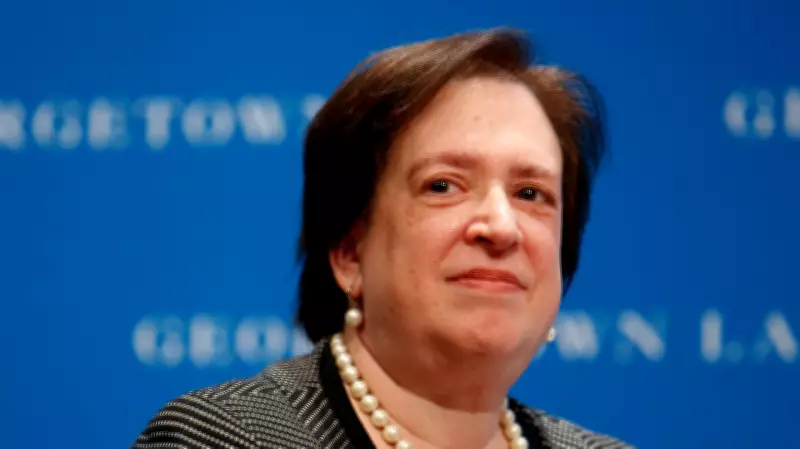
The Supreme Court's 6-3 decision on Wednesday, allowing states to redraw voting districts in ways that could decrease minority representation, may set the United States back to the era before the landmark Voting Rights Act of 1965, warned Justice Elena Kagan in a forceful dissent. Joined by Justices Ketanji Brown Jackson and Sonia Sotomayor, Kagan outlined a long and dispiriting history of how states circumvented the 15th Amendment from its ratification in 1870 until at least 1965.
The 15th Amendment's Unfulfilled Promise
Kagan noted that despite the 15th Amendment guaranteeing racial equality in voting, it did almost nothing for a century. 'Especially in the South, States soon put in place a host of facially race-neutral devices to systematically disenfranchise African American citizens,' she wrote. These included poll taxes, literacy tests, 'good character' exams, property qualifications, and convoluted registration processes, all of which effectively suppressed the Black vote when combined with administrative discretion.
The impact was stark: registered Black voters in Louisiana plummeted from 130,000 in 1896 to just 1,304 in 1904. The Voting Rights Act and subsequent congressional actions made critical strides in correcting these injustices, but the court's latest decision, Kagan argued, represents a historically grave misstep.

Kagan's Dissent: A Defense of the Voting Rights Act
Kagan characterized the Voting Rights Act as 'one of the most consequential, efficacious, and amply justified exercises of federal legislative power in our Nation's history.' She emphasized that it was born from the sacrifices of Union soldiers and civil rights marchers, brought about awe-inspiring change, and was repeatedly reauthorized by Congress. 'Only they have the right to say it is no longer needed—not the Members of this Court,' she declared.
She warned that the decision marks a return to the minority voter disenfranchisement of the past, when politicians could create majority-white districts so egregious that minority residents saw no point in registering to vote. 'The consequences are likely to be far-reaching and grave,' she predicted, adding that 'minority voters can now be cracked out of the electoral process.'
A Call for Congressional Authority
Kagan concluded her dissent by emphasizing that Congress, not the Court, should decide the future of the Voting Rights Act. 'I dissent because Congress elected otherwise. I dissent because the Court betrays its duty to faithfully implement the great statute Congress wrote. I dissent because the Court's decision will set back the foundational right Congress granted of racial equality in electoral opportunity.'