NDP Leadership Hopefuls Form United Front Against Liberal Firearm Compensation Initiative
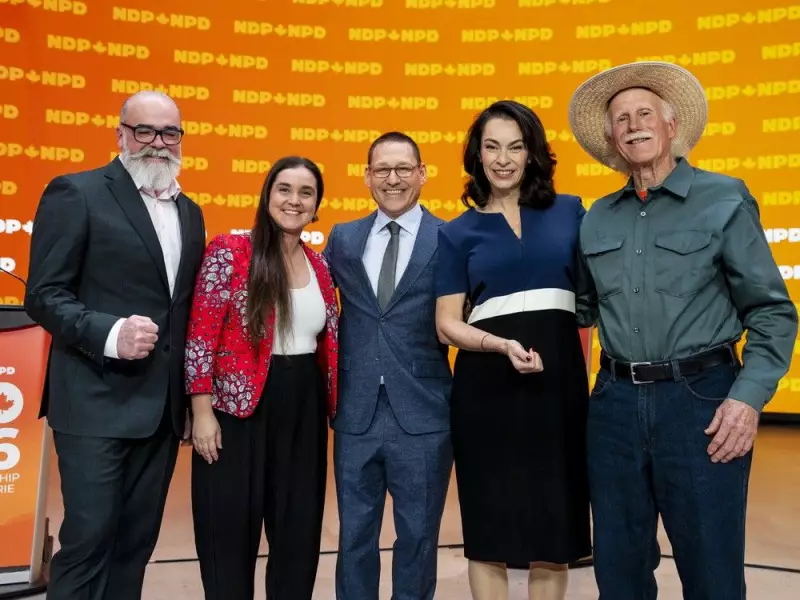
In a striking display of political alignment, all five candidates vying for leadership of the federal New Democratic Party have declared their opposition to the Liberal government's controversial firearm "buyback" program. This collective stance reinforces a significant policy distinction between Canada's two major progressive parties regarding gun ownership rights and regulatory approaches.
Candidates Voice Strong Criticism of Liberal Policy Implementation
The National Post confirmed through direct communication with all five campaigns that they oppose the fledgling mandatory compensation program targeting what the government classifies as "assault-style" firearms. This initiative affects owners of more than 2,500 makes and models of firearms that authorities have deemed too dangerous for civilian possession.
Leading contender Avi Lewis, a prominent filmmaker and activist, issued a statement proposing an alternative approach. "I would replace this divisive Liberal buyback with gun laws that respect expert recommendations, legal and responsible gun ownership, and constitutionally-enshrined Indigenous and treaty rights to hunt and fish," Lewis declared.

Credibility Concerns and Political Motivations Exposed
Lewis pointed to damaging revelations that have undermined the program's credibility, specifically referencing private comments from Public Safety Minister Gary Anandasangaree that were recorded without his knowledge and surfaced online last fall. "The program is in shambles in large part because of hot mic comments suggesting that it's driven by cynical politics rather than effective policy," Lewis asserted.
The leaked audio captured Anandasangaree implying that the Liberals were proceeding with the buyback primarily to placate voters in Quebec while expressing serious doubts about the program's enforceability. This admission has provided substantial ammunition for critics questioning the initiative's genuine motivations and practical viability.
Practical Implementation Challenges Highlighted
Edmonton MP Heather McPherson, the only sitting parliamentarian in the NDP leadership race, acknowledged the importance of addressing weapons targeted by the program but declared the buyback essentially "dead on arrival" following the minister's comments. "Getting assault-style rifles off our streets must be a priority," McPherson stated, "but even the Liberal minister has admitted the buyback program wouldn't work or be enforceable."
McPherson suggested redirecting resources toward intercepting illegal firearms at the Canada-U.S. border while criticizing the Liberals' failure to secure provincial cooperation. She specifically referenced Manitoba NDP Premier Wab Kinew's recent announcement that his government would not participate in the federal program. "The Liberals are forcing this program ahead without properly working with provinces," McPherson observed, "so Manitoba is right to be frustrated."
Rural Perspectives and Broader Opposition
Even Tony McQuail, the leadership race's self-described pacifist and organic farmer, expressed disapproval of the Liberal initiative. "As a rural farmer, I'm also a gun owner and feel that Canadian gun owners deserve better than a hasty and unproven program with ineffective implementation," McQuail explained, highlighting concerns from agricultural communities about the policy's practical implications.
Tracey Wilson, vice-president of the Canadian Coalition for Firearm Rights, praised Lewis's position as "shockingly based" in its defense of law-abiding gun owners. This endorsement from firearm advocacy groups underscores how the NDP candidates' opposition resonates beyond traditional political boundaries.
The unified stance among NDP leadership contenders signals potential challenges for future parliamentary cooperation on firearm legislation and establishes clear ideological ground between the parties as the NDP prepares to select its new permanent leader in March.