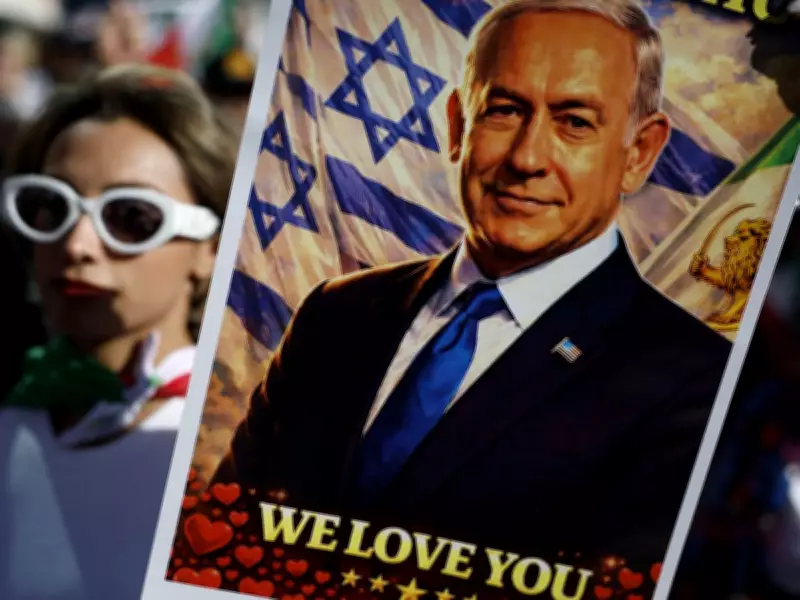
Netanyahu's Confident Return as Israel Successfully Counters Iranian and Hezbollah Assaults
SDEROT, Israel — In a dramatic press conference held shortly after 9 p.m. local time on Thursday, Israeli Prime Minister Benjamin Netanyahu made his first public appearance since the conflict with Iran began on February 28. The event marked a significant moment in what has become a pivotal regional confrontation.
A Transformed Leader Emerges
This was not the Netanyahu of recent years, but rather the dynamic, assertive leader from decades past. Displaying remarkable energy and vitality, the Prime Minister projected an air of confidence that had been absent for some time. His demeanor was nothing short of bullish, with a feisty attitude that reminded observers of his earlier political career.
The Prime Minister's swagger was palpable as he addressed the nation, coming after twelve days of silence during what has been described as a particularly challenging military engagement. Netanyahu has historically preferred to make public appearances when confident of positive reception, and Thursday's performance suggested he believed his moment had arrived.

Context of Regional Threats
Netanyahu reminded Israelis of the dire predictions that had circulated following the October 7 attacks. At that time, Iran appeared to be gaining significant regional influence, moving perilously close to nuclear breakout capability while maintaining an arsenal of thousands of ballistic missiles. The Iranian regime enjoyed substantial support from patrons including China, Russia, and Qatar.
Meanwhile, Iran's powerful Lebanese-based proxy, Hezbollah, had been heavily armed and prepared to launch attacks against Israel. In this constellation of threats, even Hamas—often considered less formidable than Hezbollah—had managed to execute the most punishing attack on Israel in fifty years.
Yahya Sinwar, the Hamas leader who directed the October 7 offensive, had envisioned what he termed the "Al Aqsa Flood"—a coordinated assault that would involve Hezbollah and Iran in what he hoped would lead to Israel's destruction. This shared goal among Islamist terror groups created what seemed like an existential threat to the Jewish state.
Turning the Tide
Against this backdrop of domestic division and external threats, Netanyahu presented a dramatically different narrative on Thursday. The Prime Minister boasted that Operation Roaring Lion—Israel's current military engagement with Iran—has fundamentally reversed the country's fortunes.
"The future for Israel looks very bright," Netanyahu declared, pledging to continue fighting to support regime change in Iran while targeting Israel's enemies wherever they might be found. This represents a significant shift from his previous doctrine of "restraint" in dealing with Hamas, which he had once believed was more interested in improving Palestinian lives than destroying Israel.
Recent Military Developments
The Prime Minister's confident appearance came just twenty-four hours after Israelis had been warned by the Home Front Command to prepare for a massive joint attack by Iran and Hezbollah. Beginning shortly after 7 p.m. on Wednesday, Hezbollah launched what became the largest single barrage against Israel to date.
The assault included:
- More than 200 rockets
- Numerous drones
- Anti-tank missiles
- Rocket-propelled grenades
The attack originated from southern Lebanon and lasted several hours, lighting up the night sky with what observers described as resembling fireworks displays. Despite the scale of the assault, Israel's defense systems appeared to have successfully countered the threat, providing the context for Netanyahu's triumphant return to public view.
Strategic Implications
Netanyahu's reemergence and confident demeanor suggest a calculated political and military strategy. Having avoided public commentary during the initial phase of the conflict, the Prime Minister chose his moment carefully, appearing only when he could present what he framed as a successful defense against coordinated attacks.

This approach reflects Netanyahu's preference for engaging with international media rather than Israeli journalists, who tend to be more knowledgeable about domestic politics and security matters and less deferential in their questioning. Even prominent American journalists have been known to offer what critics describe as "soft lobs" when interviewing the Israeli leader.
For a population that had grown accustomed to deep domestic divisions and a sense of impending crisis, Netanyahu's performance offered a narrative of resilience and renewed strength. Whether this represents a genuine turning point in regional dynamics or a carefully staged political moment remains to be seen, but the Prime Minister's swagger suggested he believes Israel has regained the initiative in its ongoing confrontation with Iranian-backed forces.