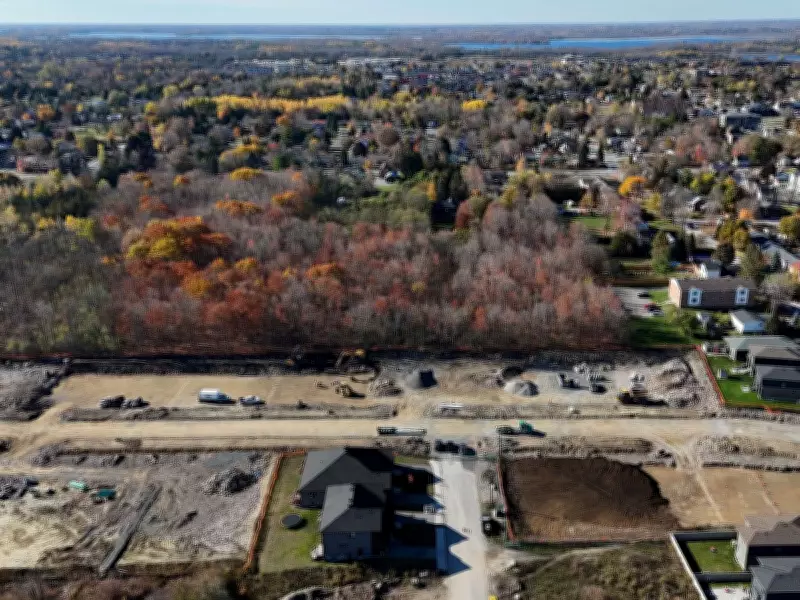
City of Ottawa planners and councillors focus a lot of attention on the perceived merits of intensification and building apartments near light rail, but they are missing a big part of the picture. Ottawa is doing a poor job of producing ground-oriented housing, the singles, semis and townhouses that families want.
In Ontario, 76 per cent of families with children live in those types of housing. The city is already losing a substantial number of families to neighbouring communities. If it cannot fix the family housing problem, it will lose even more, driving young families out of their own city and failing to attract new ones.
Research Highlights the Gap
The Greater Ottawa Homebuilders Association is calling attention to the problem, pointing to research from the Missing Middle Initiative, a think tank based at the University of Ottawa. While the Ottawa region continues to attract Ontarians from elsewhere in the province, a growing share are choosing communities outside Ottawa’s municipal boundaries in search of more suitable and affordable housing, says Mike Moffatt, founding director of the institute.

In a separate report comparing growth in Ottawa to that in Lanark County, Moffatt points out that 20 years ago, Ottawa became home to 80 per cent of people moving to the area from elsewhere in Ontario. Over the last four years, Ottawa got only 27 per cent of that group, just slightly better than Lanark or Prescott and Russell.
Shortfall in Ground-Oriented Units
The lack of family housing in the city is the root cause of the problem. Over the last two years, the city has averaged 3,000 ground-oriented units per year. Moffatt estimates that to meet the demand for that kind of housing between 2021 and 2051, it would take 7,600 units a year. Ottawa has never achieved that pace.
The gap between ground-oriented demand and new supply of those types of homes will leave Ottawa short nearly 104,000 units by 2051, Moffatt predicts.
Growth in Neighbouring Communities
To anyone familiar with the growing communities near Ottawa, the family housing growth there is neither a surprise nor a mystery. Expansion is rapid in Kemptville, Russell, Carleton Place and Mississippi Mills. These communities are attracting families and developers because they have lower land costs, lower development charges and quicker approvals. Moffatt says prices in outlying communities can be $200,000 less than the same house in Ottawa.
Meanwhile, Ottawa’s planners and politicians continue to act as if Ottawa is an island and there is no escape. On this island, they determine what type of housing will be built and where it will be located. It is a command-and-control approach, the opposite of responding to market preferences.
Even though new suburbs are dense and their location controlled by the city, it is still popular to decry them as sprawl. If expanding Ottawa’s suburbs is sprawl, what would sprawl opponents call the ever-increasing expansion beyond the city’s borders?