The first federal budget from Prime Minister Mark Carney's government faces serious credibility questions after the Parliamentary Budget Officer exposed what critics call accounting tricks designed to disguise spending.
Budget Shell Game Exposed
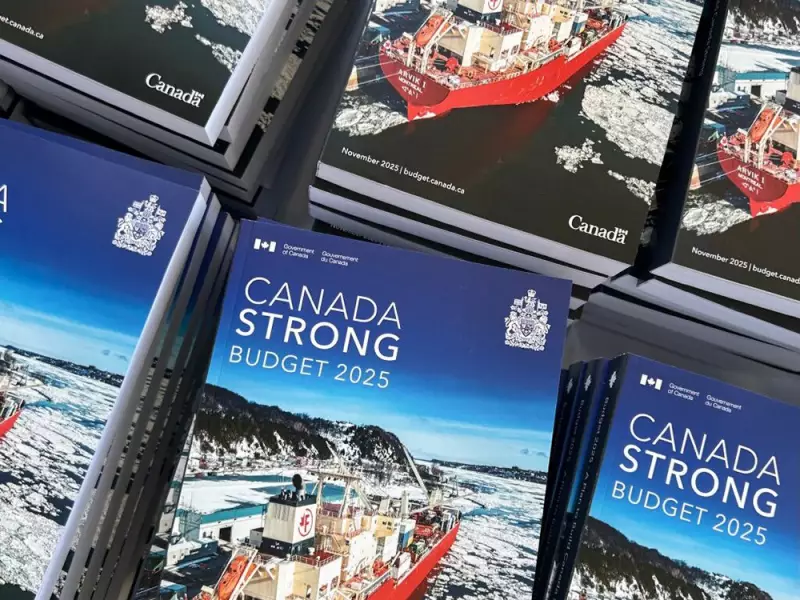
When Mark Carney unveiled his "Spend Less, Invest More" slogan and proposed separating federal finances into operating and capital budgets, many predicted this would become a mechanism to hide increased spending. Those predictions have now been confirmed in Carney's Canada Strong budget, presented on Tuesday, November 4, 2025.
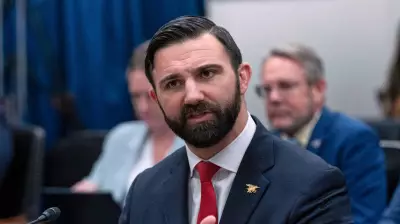
Conservative MP Sandra Cobena immediately identified the problem, stating: "The government is playing with the very definitions of capital and operating budgets by shifting tax breaks and subsidies into the capital column to give the illusion of fiscal prudence. It is not prudence; it is the manipulation of Canada's budget."

PBO Analysis Reveals $94 Billion Problem
The Office of the Parliamentary Budget Officer released a damning report last week that confirms the Liberal government's accounting maneuvers. "PBO maintains its view that the Government's definition of capital investments is overly expansive," the report states.
According to the analysis, while the government claims $311 billion of its spending from 2024-25 to 2029-30 represents "capital investments," approximately $94 billion—about 30 percent—doesn't meet standard definitions of capital investment.
The PBO specifically questioned items like:
- Film and video subsidies classified as "capital-focused tax incentives"
- Taxpayer subsidies for battery manufacturing called "support to unlock large-scale private sector investment"
These expenditures, the PBO argues, represent government spending rather than genuine capital investments.
Growing Fiscal Concerns
Beyond the accounting classification issues, the PBO raised serious concerns about the budget's deficit projections. The government projects the deficit-to-GDP ratio will decline from 2025-26 to 2029-30, but the PBO estimates the probability of this happening every year from 2026-27 to 2029-30 is only about 7.5 percent.
William Robson of the C.D. Howe Institute documented how with each fiscal update, including the 2025 budget, the Liberal government has revised its spending projections upward. "If the spending projections are not serious, the fiscal plan is not serious," Robson wrote.
The budget reveals dramatic revisions from previous projections:
- The 2024 fall statement showed the deficit for 2025-26 at $42 billion
- The current budget projects it at $78 billion
- Expenses for 2025-26 have jumped from $515 billion to $586 billion since the 2022 Fall Economic Statement
Robson's analysis shows the government has consistently revised its deficit, debt-to-GDP ratio, and total liabilities projections higher in each fiscal update, suggesting the current projections likely significantly underestimate future spending.