Pentagon Official's Prayer Mistakenly Quotes Pulp Fiction, Not Scripture
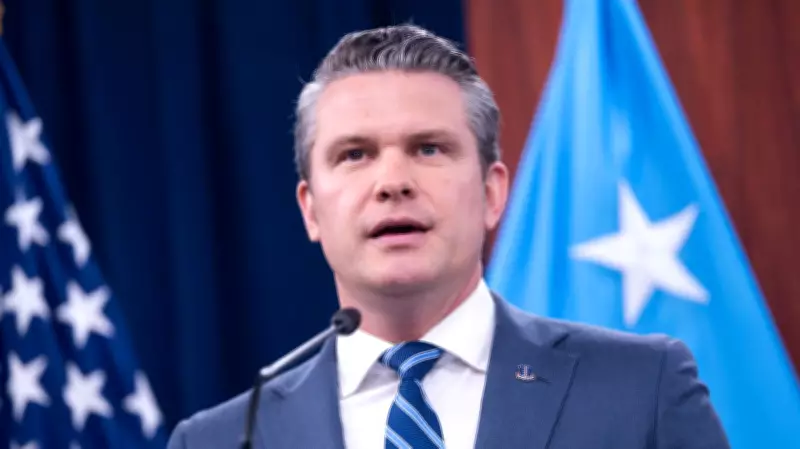
In a public appearance that underscores the Trump administration's increasingly strained relationship with the Vatican, Defense official Pete Hegseth appeared to confuse lines from a classic crime film with biblical Scripture this week. During a livestreamed worship service at the Pentagon on Wednesday, Hegseth delivered a prayer that viewers quickly noted bore a striking resemblance to Samuel L. Jackson's iconic monologue from the 1994 film "Pulp Fiction," rather than the Bible verse he referenced.
Prayer Echoes Film Dialogue, Not Biblical Text
Hegseth introduced the prayer by stating, "They call it CSAR 25:17, which I think is meant to reflect Ezekiel 25:17." However, his subsequent words diverged sharply from the actual scripture. He recited, "The path of the downed aviator is beset on all sides by the inequities of the selfish and the tyranny of evil men. Blessed is he who, in the name of camaraderie and duty, shepherds the lost through the valley of darkness, for he is truly his brother's keeper and the finder of lost children. And I will strike down upon thee with great vengeance and furious anger those who attempt to capture and destroy my brother, and you will know my call sign is Sandy 1 when I lay my vengeance upon thee."
This closely mirrors Jackson's character Jules Winnfield in "Pulp Fiction," who says, "The path of the righteous man is beset on all sides by the inequities of the selfish and the tyranny of evil men. Blessed is he who, in the name of charity and goodwill, shepherds the weak through the valley of darkness... And you will know my name is the Lord, when I lay my vengeance upon thee." The actual Ezekiel 25:17 in the King James Bible is much shorter: "And I will execute great vengeance upon them with furious rebukes; and they shall know that I am the Lord, when I shall lay my vengeance upon them."

Context and Reactions to the Gaffe
Hegseth explained that the prayer was associated with the "Sandy 1" combat search and rescue mission in Iran. Notably, "Pulp Fiction" writer-director Quentin Tarantino reportedly drew inspiration from a 1973 Japanese film, "Bodyguard Kiba," for Jackson's monologue. As of Thursday, Hegseth had not publicly addressed the incident, and the Defense Department did not immediately respond to requests for comment.
The prayer gaffe quickly went viral online, sparking a wave of snarky responses. New York Times journalist Nicholas Kristof commented on X, "When our leaders mix up God and a movie, in trying to suggest that God is behind them, that suggests the muddle we're all in." Journalist James North quipped, "The Old Testament's 'Book of Tarantino.'"
Broader Tensions with Catholic Leadership
This incident occurs amid rising tensions between the Trump administration and high-ranking Catholic leaders. Recently, President Donald Trump criticized Pope Leo XIV on Truth Social, calling him "WEAK on Crime, and terrible for Foreign Policy" after the pontiff voiced concerns about the Iran war and immigration policies. On the same day, Trump shared an AI-generated image depicting himself as a Christ-like figure, which he later deleted after bipartisan condemnation as "blasphemous," though he claimed it was meant to portray him as a doctor.
The convergence of these events highlights a deepening rift, with Hegseth's prayer mishap serving as a symbolic moment in the ongoing discord between the administration and religious institutions.