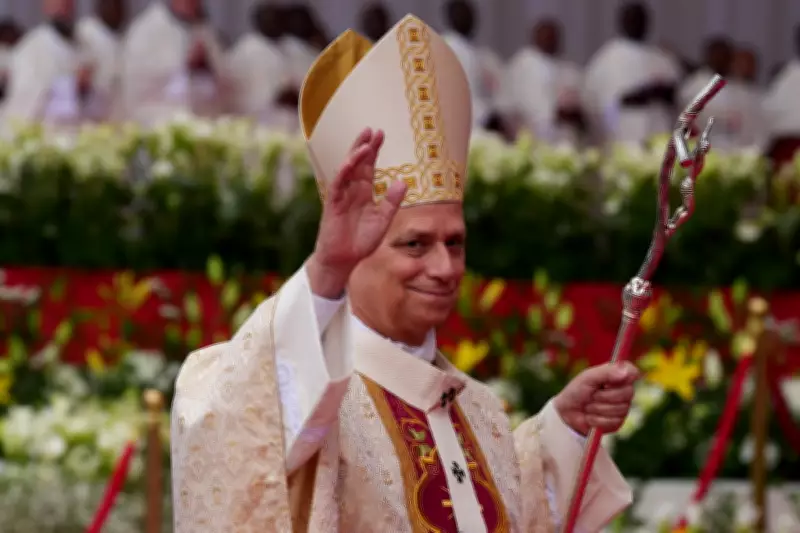
Pope Leo XIV has appointed a former undocumented immigrant from Mexico as the new bishop of West Virginia, a historic move that underscores the Catholic Church's commitment to migrants and refugees. The appointment, announced on May 1, 2026, marks a significant milestone in the Church's efforts to reflect the diversity of its global flock.
Historic Appointment
The new bishop, whose name has not been disclosed, entered the United States without legal documentation as a young man. He later became a priest and rose through the ranks of the Church hierarchy. His appointment is seen as a powerful symbol of inclusion and a message of hope for immigrants worldwide.
Pope Leo XIV, who has made migration a central theme of his papacy, personally selected the bishop for the Diocese of West Virginia. The diocese covers the entire state and serves a population of approximately 1.8 million people, including a growing Hispanic community.

Reactions and Significance
The appointment has been praised by immigrant advocacy groups and Catholic leaders alike. Cardinal Joseph Tobin of Newark called it "a prophetic act that recognizes the gifts immigrants bring to the Church and society." Some conservative Catholic groups, however, have expressed concern about the Church's stance on immigration enforcement.
The new bishop is expected to focus on pastoral care, social justice, and outreach to marginalized communities. He will be officially installed in a ceremony at the Cathedral of St. Joseph in Wheeling later this month.
This appointment comes amid ongoing debates in the United States over immigration policy, including the status of undocumented immigrants. The Church has consistently advocated for compassionate immigration reform, including pathways to citizenship for those already in the country.
The Pope's decision also reflects a broader trend of appointing bishops from diverse backgrounds, including former refugees and migrants, to lead dioceses in the United States and around the world.