Senator Rand Paul Questions Validity of Trump Administration's Iran War Justifications
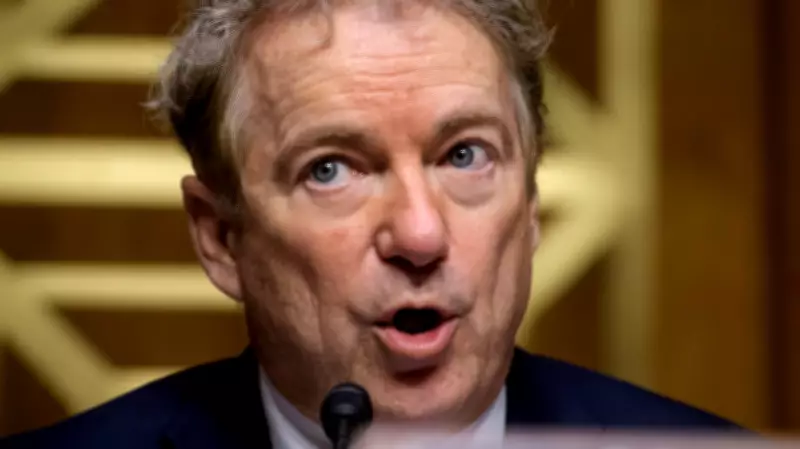
President Donald Trump and his administration have presented multiple rationales for the ongoing military conflict with Iran, but none have persuaded Senator Rand Paul (R-Ky.) to endorse the engagement, which has already resulted in the deaths of at least seven U.S. service members. Paul has consistently set himself apart from most of his Republican colleagues by opposing the administration's foreign interventions and military operations.
Critique of Liberation and Nuclear Threat Arguments
During a recent appearance on the Fox Business Network, Senator Paul criticized the purported reasons for the war. "One reason is that we want to free the Iranian people from oppression," Paul told host Maria Bartiromo. "I have a great deal of sympathy. I want people to be free around the world. But if our foreign policy is to free oppressed people, I'm not sure where war would end."
He elaborated further, pointing out the impracticality of such a broad goal. "I mean, there are many people that are said to be oppressed in China, Tibet, the Uyghurs, North Korea, Russia. Where would war end if our goal is to free oppressed people? So I think that goal is too grandiose and would perpetually tie us up in war."

Paul argued that another key justification is equally questionable. "Another statement has been made, 'Well, they're a week away from a nuclear weapon,'" the Kentucky Republican said. "You can take clips from the '90s all the way through the present of people arguing that they're a week away from nuclear weapons."
Historical Context and Intelligence Disputes
This narrative has been challenged by the passage of time itself. For instance, The Daily Show compiled a montage last year, spanning from 1995 to 2025, featuring Israeli Prime Minister Benjamin Netanyahu repeatedly warning that Iran poses an imminent nuclear threat, highlighting the persistence of such claims over decades.
Paul also addressed assertions about Iran's ballistic missile capabilities. "Then, there were arguments made, 'Well, their ballistic missiles are almost able to reach the U.S.,' But then our intelligence countered that and said really they would be six months to a year [from being able to do that], if they made that attempt [in the first place]," said Paul.
Consistent Opposition and Broader Criticisms
The constitutional conservative has maintained a firm stance against the Trump administration's foreign military entanglements. In the past, Paul has criticized other U.S. actions, such as strikes on alleged drug boats in Caribbean and Pacific waters, which he labeled as "summary execution."
Despite President Trump's assertion that war with Iran is necessary to prevent nuclear weapon development—a claim contradicted by his own statement last year that these capabilities had been "totally obliterated" in targeted U.S. strikes—Paul decried the conflict as a clear "war of choice."
Paul concluded emphatically, "A war of choice is not my choice," reinforcing his view that military action should be a last resort, not an initial response. His critiques underscore ongoing debates within the GOP and broader political discourse about the validity and consequences of U.S. foreign policy decisions.