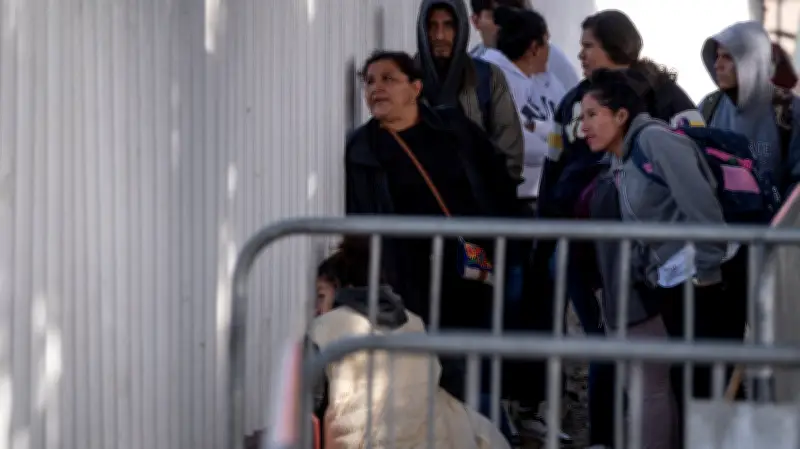
The Supreme Court on Thursday ruled that asylum-seekers physically stopped by U.S. authorities at the border have no legal right to seek safety in the United States. The 6-3 decision, along ideological lines, was delivered by Justice Samuel Alito.
Metering Policy at Issue
The case arose from the so-called “metering” policy, which began at the tail end of President Barack Obama’s administration and was systematized by President Donald Trump in his first term. Under the policy, people seeking asylum by surrendering at ports of entry were turned away by the thousands. The policy ended in 2024 due to litigation, but the Trump administration revived the issue last year.
When metering was in effect, it led to hundreds of cases of assault, kidnap, and murder of would-be asylum applicants who were turned away, according to litigants. The court’s ruling now gives the government the power to add another hurdle for people attempting to legally seek refuge in the United States.

Legal Question: 'Arriving' in the United States
The case hinged on whether someone could be considered to be “arriving” in the United States—making them eligible to claim asylum—even if they were stopped at the border by U.S. border guards. Justice Alito wrote for the majority: “The wisdom of the policy of metering alien arrivals at the southern border is not before us. We decide only that an alien standing in Mexico does not 'arriv[e] in the United States.' The [Immigration and Nationality Act of 1952] neither entitles such an alien to apply for asylum nor requires an immigration officer to inspect him.”
Under the metering policy, guards told asylum-seekers that ports of entry had reached capacity and that they must return another time. Without an organized tracking system, many languished in northern Mexico, often away from support networks and vulnerable to violence. Lower courts had found the policy unlawful.
Historical Context and Criticism
The right to seek asylum once a person has set foot on U.S. soil—even for those who cross without authorization—is enshrined in federal law. However, American history is marked by failures to accept refugees, notably in 1939 when hundreds of Jewish refugees on the MS St. Louis were denied entry, and many later died in the Holocaust. Humanitarian group HIAS wrote in an amicus brief: “Informed by the suffering of the St. Louis passengers, Congress codified asylum protections at U.S. borders and created orderly procedures to assess asylum claims from people who reach a port of entry and to grant refuge to those who risk persecution if turned away. The policy here flouts the law Congress enacted and wrongly turns back the clock to a period when people fleeing persecution were forced to face arbitrary procedures, crushing uncertainty, and prolonged sojourns in dangerous conditions in a legal no man’s land.”
Broader Trump Administration Actions
In addition to seeking the revival of metering, the Trump administration has pursued other methods to curtail migration and asylum-seeking. On his first day back in office, Trump declared an “invasion” on the southern border as a pretext for suspending asylum rights. In April, a three-judge panel on the U.S. Court of Appeals for the D.C. Circuit found that action unlawful.