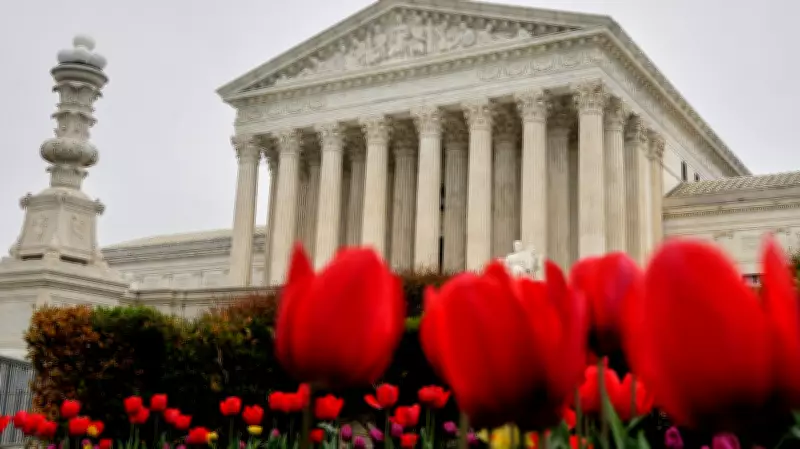
A Supreme Court decision striking down a majority Black congressional district in Louisiana has amplified an already intense national redistricting battle, providing Republican officials in several states new grounds to redraw voting districts.
In Alabama, Republican Governor Kay Ivey announced Friday that she is calling a special legislative session to begin Monday, hoping the Supreme Court will allow the state to change its U.S. House map before the November midterm elections. Louisiana has already suspended its May 16 congressional primary to allow lawmakers to approve new districts, though that move is being challenged in court. Meanwhile, President Donald Trump is pressuring states like Tennessee to also redistrict ahead of the midterms, which will determine whether Republicans maintain control of the closely divided House.
Background on Redistricting Battles
Trump urged Texas Republicans last year to redraw U.S. House districts for partisan advantage, and Democrats in California responded similarly. Other states soon joined the battle, with lawmakers, commissions, or courts adopting new House districts in eight states. That total could grow following the Supreme Court's decision, which significantly weakened a provision in the federal Voting Rights Act.

Louisiana's Response
Louisiana's current House map has two Democrats and four Republicans. Early in-person voting was to begin Saturday for the primaries, but Republican Governor Jeff Landry moved quickly Thursday to postpone the congressional primary while allowing other elections to proceed. A federal lawsuit filed Thursday on behalf of a Democratic candidate and voter asked a court to block Landry's order, and two more lawsuits were filed Friday in state court. A three-judge federal panel also issued an order Thursday suspending the congressional primary. Republican state legislative leaders say they are prepared to pass new districts and set a new primary date before their session ends in a month.
Alabama's Response
Alabama's current House map has two Democrats and five Republicans. The state's primaries are set for May 19, but officials filed an emergency motion with the Supreme Court Thursday seeking expedited review of a redistricting appeal. A federal court in 2023 ordered a new near-majority Black district, resulting in the election of a second Black representative. Alabama is under court order to use the new map until after the 2030 census. The state seeks to lift an injunction blocking a 2023 map drawn by the Republican-controlled Legislature that lacked the new district. Governor Ivey said the special session will focus on contingency plans for special primaries if the Supreme Court acts quickly.
Florida's Response
Florida's current House map has eight Democrats and 20 Republicans. Hours after the Supreme Court ruling, Florida's Republican-led Legislature approved new districts that could help the GOP gain up to four seats in November. Republican Governor Ron DeSantis called a special session before the ruling, expressing confidence in the outcome. The new map reshapes a southeastern Florida district that DeSantis said was created to elect a Black representative under the Voting Rights Act. A 2010 state constitutional amendment prohibits districts that diminish minority voting power, but DeSantis considers it unconstitutional, a question expected to be decided by courts.
Tennessee's Response
Tennessee's current House map has one Democrat and eight Republicans. The General Assembly recently ended its session, but pressure is growing to reconvene and revise districts. Trump posted on social media Thursday that he spoke with Republican Governor Bill Lee, who would work for a new map to gain an additional seat. The only Democratic seat is in majority-Black Memphis. Tennessee House Speaker Cameron Sexton said he is in conversations with the White House and others while reviewing the court's decision. The candidate qualifying period ended in March, and the primary is August 6.

Mississippi's Response
Mississippi's current House map has one Democrat and three Republicans. The state held its primaries in March, but the Supreme Court decision could affect other offices. Republican Governor Tate Reeves announced a special legislative session to redraw state Supreme Court voting districts, starting 21 days after the ruling, around May 20. A federal judge last year ordered Mississippi to redraw those districts for diluting Black voting power. Lawmakers had waited for the Louisiana case before acting. Reeves said the ruling provides guidance on whether race-conscious redistricting violates the Constitution.
Georgia's Response
Georgia's current House map has five Democrats and nine Republicans. Early in-person voting began April 27 ahead of the May 19 primaries. Republican Governor Brian Kemp said it is too late to change congressional districts for this year because voting is underway, but the Supreme Court's rationale requires Georgia to adopt new maps before the 2028 election cycle.
Associated Press writers Jeff Amy and Kim Chandler contributed to this report.