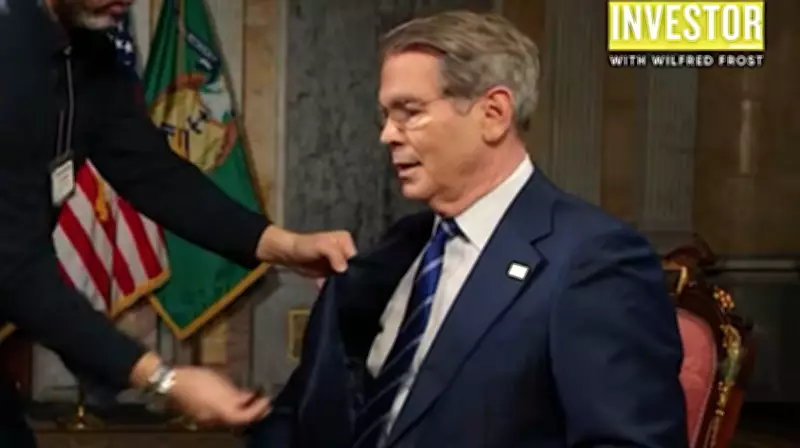
In a startling interruption of a live television broadcast, U.S. Treasury Secretary Scott Bessent was summoned away from an interview on Thursday morning by an urgent call from President Donald Trump. The incident occurred while Bessent was discussing Japanese economics with Sky News host Wilfred Frost on the program "The Master Investor." An aide was heard off-camera informing the secretary, "Sorry, the president wants you right away," prompting immediate removal of his microphone and a swift departure at 10:22 a.m.
Secretary Returns Distracted and Nervous
Bessent resumed the interview nearly two hours later at 12:07 p.m., but his demeanor had shifted dramatically. He appeared visibly distracted, fumbling for words and speaking with noticeable nervousness. When Frost inquired about the president's state, asking, "How was the president? Was he stressed?" Bessent responded haltingly, "Uh, no, the the president is in great spirits."
He then made an unexpected personal revelation, stating, "I have to tell you, Wilf, that I’ve a teenage teenager who’s considering, uh, military service. And I could give this team my highest compliment. From President Trump to the head of the joint chiefs to the secretary of war. I would they say that I would trust my child’s life in their hands." Frost acknowledged the comment about Bessent's child being brave before attempting to steer the conversation back to economic topics.

Key Policy Revelation on Iran and Oil Security
Amid the awkward exchange, Bessent disclosed significant information regarding U.S. military strategy in the Persian Gulf. He confirmed that the "Iranian mission is proceeding well ahead of schedule" and addressed escalating tensions in the Strait of Hormuz. Despite reports that Iran is laying mines in the critical waterway, which handles about one-fifth of the world's oil shipments, Bessent asserted, "We know that they have not mined the straits."
He further revealed plans for the U.S. Navy to escort oil tankers through the strait, stating, "My belief is that as soon as it is militarily possible, the U.S. Navy, perhaps with an international coalition, will be escorting vessels through." Bessent noted that some tankers, including Iranian and Chinese-flagged vessels, are currently navigating the passage. This announcement comes as oil prices remain elevated around $100 per barrel amid the ongoing U.S.-Iran conflict.
Broader Implications and Market Reactions
The incident highlights the intense pressure and rapid decision-making environment within the Trump administration as it manages multiple international crises. Bessent's abrupt departure and subsequent flustered return underscore the high-stakes nature of White House operations, where economic and military priorities frequently intersect.
Analysts suggest that the secretary's comments may signal a more assertive U.S. posture in securing global oil supplies, potentially involving coalition partners. The revelation about escorting tankers could have far-reaching implications for energy markets, geopolitical stability, and military logistics in the region.
As the situation develops, observers will be closely monitoring both the administration's next moves and Bessent's public appearances for further insights into policy directions and internal dynamics.