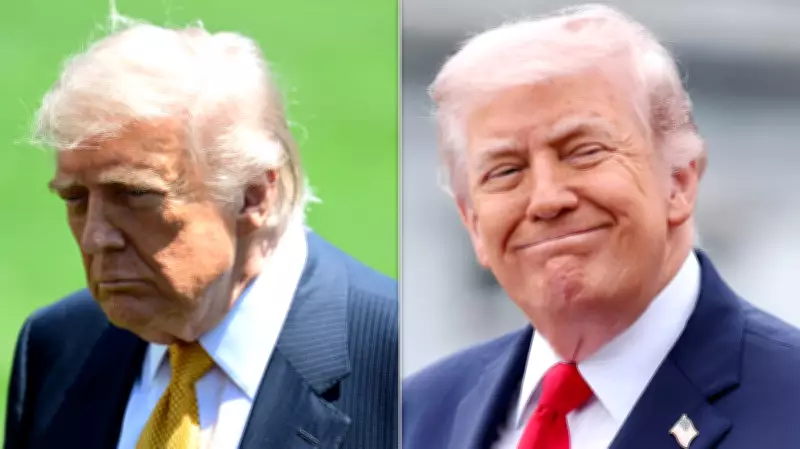
President Donald Trump’s approval rating has fallen to 37%, the lowest point of his second term, according to a New York Times/Siena poll released Monday. This marks a three-point drop from the previous poll in January. With 59% of voters disapproving of his performance, experts anticipate Trump will respond with his usual tactics: dismissing unfavorable data and diverting media attention.
Expert Analysis of Trump's Approach
Dino Christenson, a professor of political science at Washington University, described the administration's style as improvisational rather than strategic. “The prevailing approach is simply to downplay unfavorable metrics or sow distrust in public data, reflecting a high degree of spontaneity, personal loyalty, and visceral, emotional reactions,” he told HuffPost.
Doug Kriner, a professor at Cornell University, highlighted Trump’s pattern of misdirection. “We’re talking about one thing, and then he’ll do something or more likely sometimes say something, just to change the narrative and get it onto something else,” Kriner said. This tactic involves flooding the news cycle with new stories to pull attention away from negative polls.

Key Drivers of Low Approval
The poll, conducted from May 11 to May 15 among 1,507 registered voters (margin of error ±2.8 percentage points), reveals widespread dissatisfaction with Trump’s foreign and domestic policies. Nearly two-thirds of voters believe going to war with Iran was the wrong decision. Additionally, 64% disapprove of his handling of the economy, and 70% disapprove of his handling of the cost of living.
Trump has not publicly commented on the latest poll. Historically, he responds by labeling negative polls as “fake” on Truth Social and shifting focus. On Monday, he withdrew a $10 billion lawsuit against the IRS and announced a $1.776 billion fund for those claiming targeting by the Biden Justice Department.
Historical Precedent
Trump’s approval rating averaged between 36% and 39% in December 2025, according to Gallup and The Economist/YouGov. His all-time low was 34% in early 2021 after the Jan. 6 Capitol attack. A November 2025 study found that his Truth Social posting patterns shifted during the Epstein file releases, suggesting efforts to redirect public attention.
Andrew Rudalevige, a professor at Bowdoin University, noted that Trump rarely changes course rhetorically. “He communicates so much so often at such a high level of outrage that he doesn’t really have a lot of tunes in minor key,” he said. Rudalevige added that the approval rating may be upstaged by other events, but Trump typically only responds when necessary.
Republican Support Remains Strong
Despite the low overall rating, Trump holds 69% approval among Republicans in the Times/Siena poll. While lower than typical Republican presidents, this support provides political cover. Christenson argued, “This durable core of party support allows him to largely dismiss his broader, national polling drops, finding political insulation in the consistency of his remaining base.”
Kriner doubts Trump will address the issues driving his decline, noting significant MAGA wins in Louisiana and Indiana. “I don’t think we’re going to see any real change here with the president,” he said. “He’s not loyal to any of those individuals — what matters is they’re loyal to him, and not vice versa.”