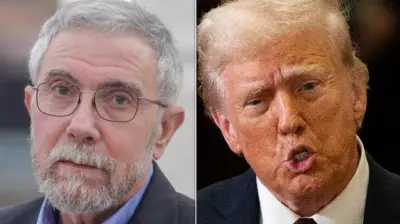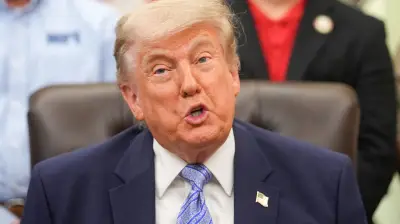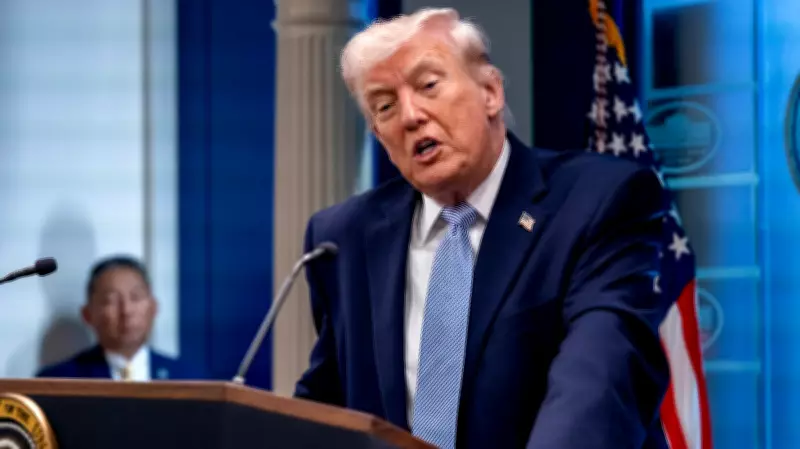
During a critical press conference addressing the escalating military tensions with Iran, President Donald Trump dramatically pivoted from geopolitical discussions to launch a personal attack against The New York Times. The diversion occurred immediately after a reporter from the publication questioned whether Trump's threats to bomb Iranian infrastructure could constitute war crimes under established international law.
A Sudden Shift in Focus
As the Times journalist began to pose the legally significant inquiry, President Trump interrupted upon hearing the outlet's name. "The failing New York Times. Your circulation, way down at The New York Times," he declared, dismissing the reporter before the question could be fully articulated. This marked the beginning of an extended tangent that dominated the latter portion of the press briefing.
Dismissing Legal Concerns
Trump initially provided a brief response to the substantive question about war crimes, stating he was "not at all" concerned. He emphasized that disarming Iran represented his paramount objective. However, rather than elaborating on military strategy or diplomatic efforts, he immediately returned to his criticism of the media organization.

"Quiet, quiet, quiet, quiet," he instructed other journalists with raised hands, effectively silencing further questions about the Iran conflict to continue his media critique.
Questioning Media Credibility
The President launched into a detailed argument challenging the newspaper's legitimacy. "You no longer have credibility at the New York Times," he asserted, referencing the outlet's incorrect prediction about the 2024 presidential election outcome. Trump claimed victory "in a landslide" and noted he "won every swing state," contrasting this with the Times' pre-election forecasting.
He further referenced the newspaper's historic reputation, noting its famous slogan "all the news that's fit to print" and traditional nickname "The Old Gray Lady." "But they're running on past fumes, and you can't keep doing that. You have to be able to give the correct news, and people like you, who I know, are fake. You're fake," Trump concluded, directly addressing the Times reporter.
Historical Context of Criticism
This incident represents the latest chapter in Trump's longstanding adversarial relationship with the prominent newspaper. In recent years, he has escalated his rhetoric significantly, previously describing the Times as "a true enemy of the people" and "a serious threat to the National Security of our Nation." These comments often followed reporting on sensitive topics, including investigations into his past associations with convicted sex trafficker Jeffrey Epstein.
The Reporting That Prompted the Response
The immediate catalyst for Trump's outburst appears to have been a specific New York Times article published just days earlier. That report provided detailed legal analysis suggesting that the President's publicly stated threats to destroy Iranian civilian infrastructure—if carried out—would likely violate international humanitarian law and constitute war crimes. By raising this precise issue during the press conference, the Times reporter inadvertently triggered the President's prepared criticism of their organization.
This exchange highlights how questions about military ethics and international law became overshadowed by a media confrontation during what was ostensibly a briefing about national security and foreign policy. The incident demonstrates the continuing tension between the administration and established news organizations, even during discussions of grave international consequences.