Donald Trump is expecting economic deals and a 'wild' welcome this week in China. He will arrive facing an emboldened Xi Jinping, just as his own hand is constrained by the conflict in Iran.
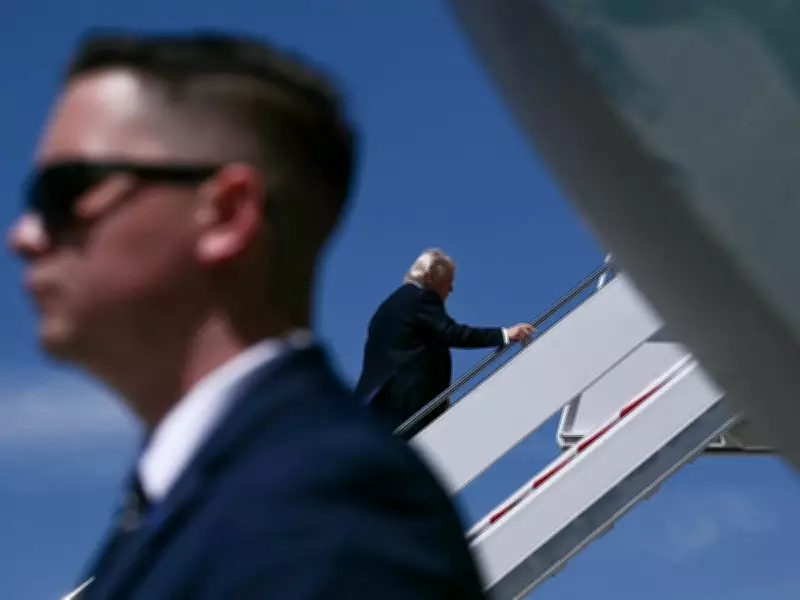
When the U.S. president touches down in Beijing on Wednesday evening for a 36-hour summit, it will mark his first overseas trip since waging war in the Middle East. Over talks at the Great Hall of the People and a state dinner, followed by morning tea, the leaders will discuss trade, tariffs and the self-ruled island of Taiwan. Another agenda item, of course, is Iran.
As the war extends into its third month, China appears to hold unique sway as the biggest buyer of the Islamic Republic's oil and a strategic partner of Tehran. U.S. Treasury Secretary Scott Bessent acknowledged that last week when he called on Beijing to help reopen the Strait of Hormuz, the closure of which has unleashed the biggest oil supply shock in modern history.

The U.S. has targeted Chinese oil refiners and firms providing satellite imagery to Iran, as Trump ramps up his campaign to pressure Tehran into a deal. Washington must balance such actions against Beijing's ace card: Rare earths, the 'golden screws' of global manufacturing, which China used last year to stare down U.S. tariffs.
'Xi is coming into the summit feeling confident he has solved Trump,' said Jeremy Chan, a senior analyst at Eurasia Group and a former U.S. diplomat, citing China's critical minerals advantage. The November midterm elections, in which higher fuel prices threaten Republican control of Congress, also mean the U.S. leader is chasing voter-friendly wins on agricultural purchases.
'Trump needs more from this summit than Xi does,' Chan added. 'And Xi knows it.'
The unresolved Middle Eastern conflict could turn the meeting into a test of China's willingness to help on the war. 'Iran could overshadow' the gathering, said Craig Singleton, a former U.S. diplomat and senior fellow at the Foundation for Defense of Democracies. 'It complicates the optics, it raises the stakes.'
Trump has repeatedly said he sees himself as having the upper hand in negotiations with U.S. adversaries and allies, and his team has insisted the president is entering talks from a position of strength. As the world's largest oil importer, China faces economic risks from a prolonged closure of the strait, especially if it affects global demand for its export machine.
Ahead of the meeting, Bessent is stopping in Japan and South Korea, sending a public message that the U.S. has allies in the region. He is also sitting down with his Chinese counterpart, He Lifeng. For its part, China is expected to welcome Russian President Vladimir Putin in Beijing later this month, as Xi balances his own diplomatic relationships.