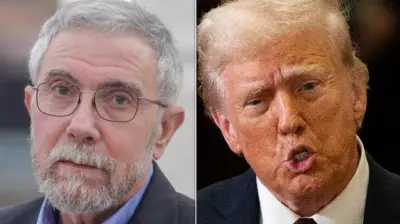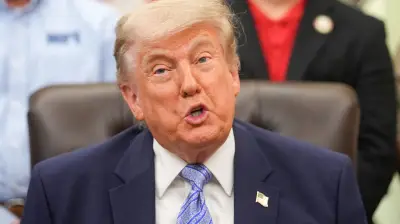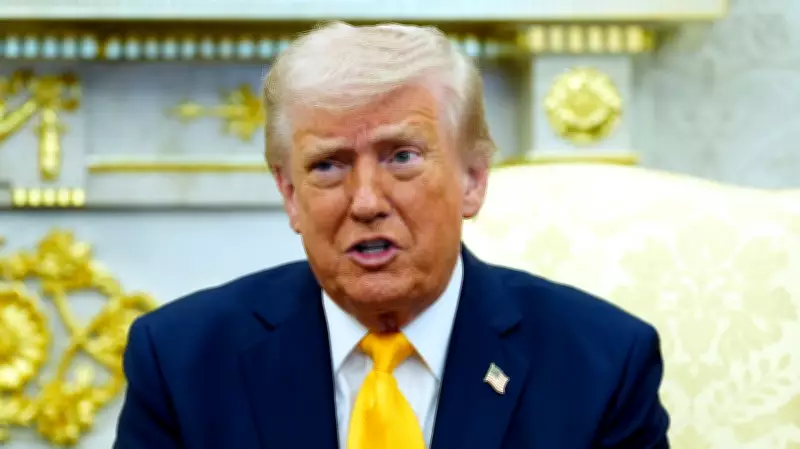
In a provocative move that challenges constitutional norms, former President Donald Trump signaled on Sunday that he believes he merits an extraordinary political prize: a third term in the White House. This assertion came through a post on his Truth Social platform, where he shared an image created by a user featuring him with the caption, "3RD TERM FOR TRUMP AS A REWARD FROM STOLEN ELECTION." The imagery and message directly reference Trump's long-debunked claims about the 2020 presidential election being rigged, allegations that fueled the violent insurrection at the U.S. Capitol on January 6, 2021.
Constitutional Boundaries and Political Ambitions
Trump's latest social media activity represents yet another instance where he has openly entertained the idea of seeking a third presidential term, despite the clear prohibition outlined in the Constitution's 22nd Amendment. This amendment, ratified in 1951, explicitly limits presidents to two terms in office, a safeguard designed to prevent authoritarian overreach. However, the legal restriction has not deterred Trump from exploring this controversial path.
He has previously engaged in actions that skirt these boundaries, such as selling "Trump 2028" merchandise and discussing the possibility of not just a third, but even a fourth term. In a repost earlier today, Trump amplified a call for him to serve a third term as a reward for what he falsely describes as "a stolen election," further entrenching this narrative among his supporters.

Historical Context and Recent Statements
The notion of Trump serving beyond two terms is not new. He has floated the idea of a "president for life" since at least 2018, and in March 2025, he told NBC News that he was "not joking" about pursuing a third term. During that interview, Trump remarked, "A lot of people want me to do it," while adding, "But, I mean, I basically tell them we have a long way to go, you know, it's very early in the administration." This statement hints at a strategic ambiguity, leaving the door open for future political maneuvers.
Support from key allies has bolstered this rhetoric. In the same month, Steve Bannon, a longtime Trump confidant, declared that he and others were actively "working" to secure a third term for Trump. Bannon told NewsNation, "I'm a firm believer that President Trump will run and win again in 2028. We've had greater long shots than Trump 2028." Just last month, Trump himself claimed he was "entitled" to a third term, underscoring his persistent challenge to electoral and constitutional norms.
Public Opinion and Political Implications
Despite these bold assertions, Trump's political standing faces significant hurdles. According to a report by The New York Times on Sunday, his approval rating has averaged around 41%, indicating substantial public skepticism. This figure suggests that while Trump retains a dedicated base, broader electoral success for a third-term bid would be an uphill battle, compounded by legal and constitutional barriers.
The ongoing discourse around a potential third term not only tests the resilience of American democratic institutions but also raises questions about the long-term impact of Trump's rhetoric on the political landscape. As debates over election integrity and presidential limits continue, this issue remains a focal point in national conversations about governance and accountability.