Trump's Unfiltered Admission: The Power of Niceness in Shaping Loyalty
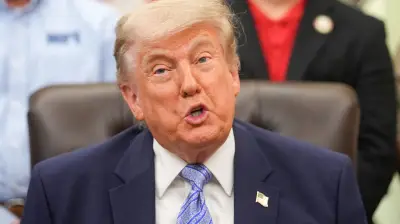
President Donald Trump's distinctive stream-of-consciousness speaking style occasionally provides rare, unvarnished glimpses into his personal psychology. During a now-deleted video from the White House Easter luncheon, the president revealed a straightforward yet revealing key to his heart: simple kindness directed toward him.
A Distracted Moment Reveals Core Psychology
Mid-sentence while discussing Iran policy at the event, Trump appeared distracted and began addressing someone off-camera, likely a media personality, praising their "great show." The president's train of thought shifted dramatically as he declared, "He's so nice to me. Every time I watch... you know, we're not supposed to be seduced that way, right, but I am. When someone's nice to me, I love that person. Even if they're bad people. I couldn't care less. I'll fight to the end for them."
This candid admission provides a window into a psychological tendency toward rewarding approval and positive treatment, regardless of other considerations.

The Neuroscience Behind Responding to Kindness
Psychological experts explain that this instinct reflects fundamental brain responses to positive social interactions. Dr. Michael S. Valdez, medical director at Detox California, notes that "when someone is kind or flattering, our brain tags that interaction as safe and positive." This neurological response creates a foundation for relationship building and loyalty formation.
Megan McElheran, a clinical psychologist and CEO of Before Operational Stress, adds that "people are highly responsive to approval and being liked or affirmed" because such interactions "activate reward pathways in the brain." These biological mechanisms explain why positive treatment can create strong emotional bonds and influence decision-making.
When Approval Overrides Objective Judgment
Both experts caution that this natural human response can sometimes lead to problematic dynamics. Dr. Valdez explains that positive social feedback "can override more objective judgment, especially if someone is wired to prioritize relationships or approval." This psychological tendency might explain why individuals sometimes maintain loyalty to those who treat them well despite contradictory evidence or concerning behaviors.
The principle of reciprocity offers additional insight into Trump's stated willingness to "fight to the end" for those who offer kindness. McElheran notes that "most humans tend to want to give that same type of energy back. So, at times, we may end up in a situation where we are giving people more credit or trust than they have actually earned."
From Appreciation to Allegiance: A Psychological Journey
Dr. Valdez describes how this process can escalate, noting that "the natural pull to return that loyalty can easily come up for people, even when it's not entirely rational." He warns that "for some people, that response is stronger and faster" and "can move from appreciation into allegiance pretty quickly."
McElheran observes that kindness is often interpreted as signaling alignment, explaining that "some people turn this into a simple lens of 'this person is on my side' and 'this person is not.' If and when that outlook occurs, being treated well will likely carry a lot of weight and really shape how strongly someone shows up for that relationship."
A Common Human Trait, Uncommonly Acknowledged
While Trump's psychology in this regard isn't unique, his public admission of it is noteworthy. Dr. Valdez emphasizes that "this type of reaction is more common than people think. It shows up as favoritism, giving people the benefit of the doubt and overlooking red flags, to name a few. Most people don't say it out loud, but the pattern is there."
McElheran finds Trump's candor particularly interesting because "it says the quiet part out loud." She notes that "the majority of people do this to some degree, but maybe in more subtle ways. Most of us have been guilty of gravitating toward people who make us feel good, overlooking certain behaviors or feeling a lot more loyal than we expected."

Ultimately, McElheran concludes that "when all is said and done, I don't think it's unusual, but it's just a more obvious version of something that most people have—and will—experience in their life." The president's unfiltered moment thus reveals a universal human tendency through the distinctive lens of his public persona.