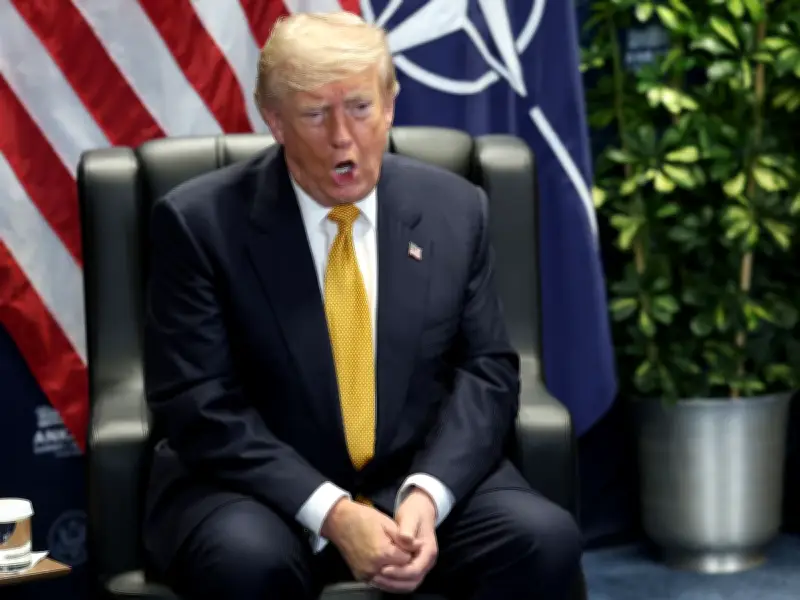
U.S. President Donald Trump declared the tentative ceasefire with Iran effectively dead on Wednesday, stating, "For me, I think it's over." The remarks came shortly after the U.S. launched a fresh wave of strikes against Iran and revoked a waiver allowing Iranian oil sales, actions that threaten to unravel last month's interim peace deal.
Trump's remarks at NATO summit
Speaking in Ankara alongside NATO Secretary General Mark Rutte at the alliance's annual summit, Trump expressed frustration with the peace process. "As far as I'm concerned it's just a waste of time," he said. He added that while negotiators could continue talking, he was pessimistic: "They can talk, but I think they're wasting their time."
New U.S. military strikes and oil waiver revocation
The U.S. carried out strikes on more than 80 sites in Iran overnight, targeting air defense systems, command and control networks, and coastal radar sites. Simultaneously, the Trump administration revoked a waiver that permitted the sale of Iranian oil, a key component of the earlier ceasefire agreement. The moves were in response to recent attacks on ships transiting the Strait of Hormuz, which the U.S. blamed on Iran.

Iran's response and threat of escalation
Iran's Foreign Ministry said the U.S. attacks and the block on oil sales had rendered last month's interim peace deal "ineffective," raising concerns that talks to make the agreement permanent could collapse. Deputy Foreign Minister Kazem Gharibabadi vowed "decisive actions" in retaliation. The Islamic Revolutionary Guard Corps claimed it struck military bases in Kuwait and Bahrain, though Kuwaiti air defenses reportedly intercepted hostile missiles and drones. Parliament Speaker Mohammad Bagher Ghalibaf warned on X: "The era of bullying and extortion is over. It leads nowhere. We don't fold."
Oil market volatility
Oil prices surged following the exchange, with Brent crude trading more than six percent higher at US$79 a barrel in London. While this is below the peak of US$126 a barrel in late April—two months after the U.S. and Israel began their military campaign against Iran—it marks a significant increase from pre-conflict levels earlier this month, when supplies appeared to be recovering. The attacks on three ships in recent days in the Strait of Hormuz have heightened supply concerns.
Fragile peace deal under threat
The ceasefire agreement, which halted fighting between the U.S. and Iran, included an end to attacks on commercial shipping and the U.S. waiver on oil sales. It established a 60-day period for negotiations on a broader peace deal. The latest developments represent the most serious threat to that interim pact. Trump, however, has shown little appetite for a return to full-blown conflict, though he expressed disdain for Iranian leaders: "I don't want to deal with them, but they're scum. They're sick people, they're led by sick people, and they're vicious, violent people, and if they had a nuclear weapon, they'd use it."