Trump Issues Executive Order to Establish National Voter List
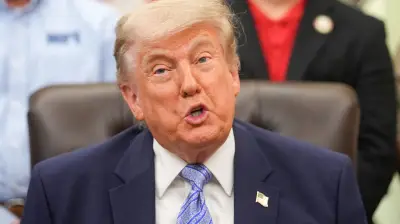
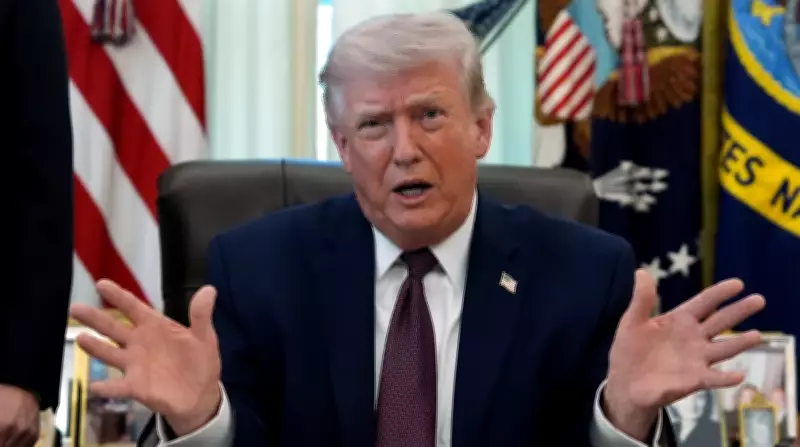
President Donald Trump signed an executive order on Tuesday aimed at creating a nationwide list of verified eligible voters, a move that is anticipated to face swift legal challenges. This action comes as the president continues to advocate for stricter voting restrictions ahead of the upcoming midterm elections.
Key Provisions of the Order
The order directs the Department of Homeland Security, in collaboration with the Social Security Administration, to compile and maintain a list of eligible voters for each state. Additionally, it seeks to prohibit the U.S. Postal Service from distributing absentee ballots to individuals not included on their state's approved voter list. However, legal experts note that the president likely lacks the authority to enforce such mandates on the Postal Service.
According to the executive order, which was first reported by the Daily Caller, the initiative also calls for ballots to be enclosed in secure envelopes featuring unique barcodes for tracking purposes. President Trump expressed optimism about the plan, stating, "I think it's going to be really great."

Legal and Constitutional Challenges
Tuesday's order is expected to prompt immediate legal battles, as critics argue it represents an unconstitutional attempt to interfere with state-run elections. David Becker, a former Justice Department lawyer who leads the Center for Election Innovation and Research, emphasized that the Constitution clearly grants no presidential power over state elections. He predicted, "This will be blocked as soon as lawyers can get to the courthouse."
This is not the first time Trump has faced legal hurdles in his efforts to reshape election processes. In March, his initial executive order, which included measures such as adding a proof-of-citizenship requirement to federal voter registration forms and mandating that mailed ballots be received by Election Day, has been largely blocked by courts. Voting rights groups and Democratic state attorneys general have challenged these actions, alleging they constitute an unconstitutional power grab that could disenfranchise numerous voters.
Context and Historical Background
Elections in the United States are decentralized, administered by local officials and volunteers across thousands of jurisdictions rather than by the federal government. The Constitution's Elections Clause grants Congress the authority to regulate federal elections but does not mention any presidential role in election administration. Trump has been a vocal critic of mail-in voting, frequently alleging fraud, despite evidence to the contrary. A 2025 report by the Brookings Institution found that mail voting fraud occurs in only about 0.000043% of cases, equating to roughly four instances per 10 million mail ballots cast.
Interestingly, Trump himself has utilized mail ballots, including in recent local Florida elections. The White House has clarified that his opposition is to universal mail-in voting, not to individual voters who may require this method due to circumstances like travel or military deployment.
In a February interview with a conservative podcaster, Trump expressed a desire to "take over" elections in Democratic-run areas, citing fraud allegations that have been repeatedly debunked by audits, investigations, and court rulings. Tuesday's order suggests a continuation of these efforts, despite previous legal setbacks.
Associated Press writers contributed to this report from New York and Columbus, Ohio.