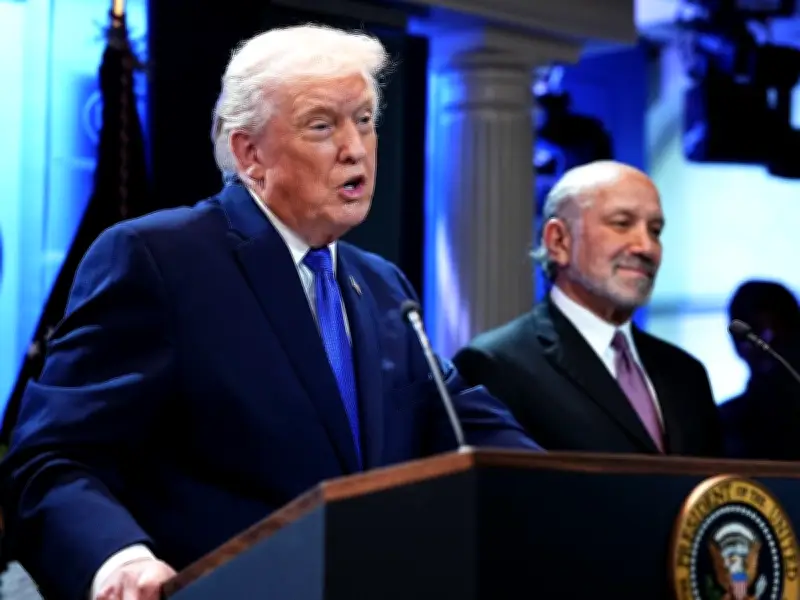
The July 1 deadline for renewing the Canada-U.S.-Mexico Agreement (CUSMA) passed without action, as Washington opted instead for an annual review process. President Donald Trump wants to renegotiate the deal to address what he sees as persistent U.S. trade deficits with Canada and Mexico. Trade policy specialist Gary Clyde Hufbauer warns that this approach could make employers act as if the agreement 'never existed,' chilling investment and disrupting supply chains.
Annual reviews create 'water torture' for businesses
Hufbauer, a senior fellow at the Peterson Institute for International Economics and former U.S. Treasury official, told the National Post that Trump's threat not to renew CUSMA 'may be just another bargaining ploy.' However, for now, non-renewal is the White House decision. 'Business firms considering major investments in Canada or Mexico have to accept that reality,' he said.
Under the annual review system, firms face persistent uncertainty. 'If their investment depends on assured access to the U.S. market, firms will want to pause and see how the political landscape shakes out before making a commitment,' Hufbauer explained. 'If the end result of USMCA review is a series of annual negotiations, that's a new world for the North American economy.'

Outright termination vs. annual reviews
Hufbauer noted that outright termination would shock Canadian firms, which have discounted Trump's hostile rhetoric. But annual reviews create a different challenge. 'Firms will be right to fear that, each year, Washington will put fresh demands on Ottawa and Mexico City,' he said. 'Indeed, some firms might prefer to cut the cord now and make their plans as if USMCA never existed.'
The prospect of 10 years of annual reviews spells a decade of guessing whether the U.S. market will remain fully open, partially open, or closed. Canadian firms will have to adjust contracts with buyers and suppliers, creating 'at least a hassle and possibly a nightmare,' according to Hufbauer.
Leverage and vulnerabilities in trade negotiations
From Washington's perspective, annual reviews enable the discovery of weak links among Canadian firms and provinces—parts of the economy susceptible to pressure from targeted tariffs or other barriers. Pressure can force those firms or provinces to cut prices or reduce sales to the U.S. market. However, Hufbauer noted that 'sauce for the goose is sauce for the gander,' meaning Canada can similarly target susceptible U.S. firms.
The uncertainty surrounding CUSMA's future threatens to undermine business confidence across North America. Hufbauer emphasized that the agreement's key attribute—business certainty—is being eroded, potentially leading to reduced investment and disrupted supply chains for years to come.