Trump's Unwavering Confidence Meets the Complex Realities of War
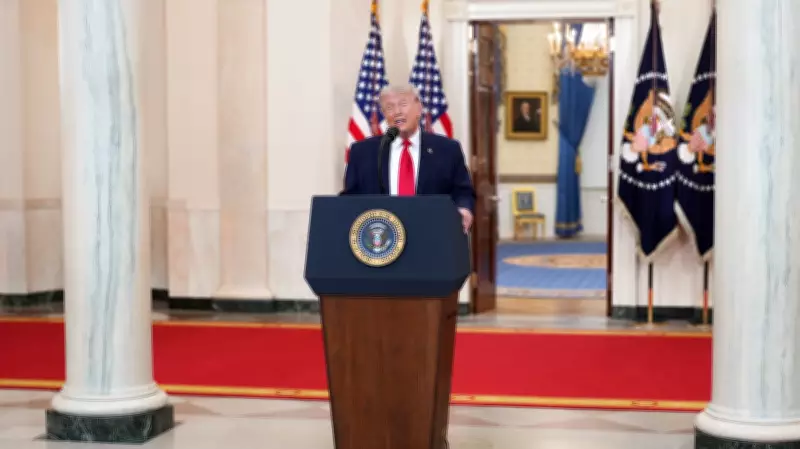
In a prime-time address from the White House, President Donald Trump declared with absolute certainty that the United States had "completely decimated Iran" both militarily and economically. "Their radar is 100% annihilated," Trump asserted. "We are unstoppable as a military force." This bold proclamation, delivered on Wednesday evening, now faces mounting challenges as the war enters its sixth week.
Military Setbacks Challenge Triumphant Narrative
The shooting down of an American fighter jet in Iran on Friday served as a stark reminder of the inherent dangers of armed conflict. This incident triggered an extensive search and rescue operation that successfully recovered one crew member. Additionally, Iranian state media reported that another U.S. aircraft was struck by Iranian air defenses. These developments directly contradicted Trump's previous assertion that Iran possessed "no anti-aircraft equipment," highlighting a significant gap between presidential rhetoric and battlefield reality.
For President Trump, who remained out of public view on Friday, these events represent the latest instance where his triumphant characterization of the war appears increasingly disconnected from actual circumstances. He has expressed surprise at Iran's aggressive moves against its Gulf neighbors and has struggled to formulate an effective response to Iran's strategic closure of the Strait of Hormuz. This critical waterway's blockage has disrupted global oil supplies, causing gasoline prices to surge dramatically across the United States.

International Isolation Grows as Allies Withhold Support
President Trump's decision to initiate military action alongside Israel, without consulting traditional allies or seeking congressional approval, has created unprecedented diplomatic challenges. His subsequent overtures to world leaders for assistance in reopening the Strait of Hormuz have been met with resistance and rejection. Some allies prefer to wait until hostilities conclude before addressing the situation, while others have been openly critical of a war that Trump chose to undertake unilaterally.
French President Emmanuel Macron articulated this growing international sentiment clearly, stating that the United States "can hardly complain afterward that they are not being supported in an operation they chose to undertake alone." Macron emphasized, "This is not our operation." Similarly, British Prime Minister Keir Starmer has maintained his refusal to involve the United Kingdom in the conflict despite facing fierce criticism from President Trump.
Domestic and International Criticism Intensifies
Even within his own political party, voices are emerging that challenge Trump's isolationist approach. Following the president's threat to withdraw from NATO, Senate Majority Leader John Thune noted there were insufficient votes in the Senate to support such a move. "We got an awful lot of people who think that NATO is a very critical, incredibly successful post-World War II alliance," Thune remarked. "I think in the world today, you need allies."
Former national security adviser John Bolton, who has become a vocal critic of the administration, identified a "serious mistake" in not consulting allies before commencing hostilities. "If you don't build your coalition before the war, it's pretty tough to do it while you're in it," Bolton observed. However, he also cautioned European leaders against opposing Trump purely out of frustration, describing such reactions as "juvenile and petulant."
Broader Pattern of Unilateral Action Faces Resistance
President Trump's preference for solitary decision-making extends beyond foreign policy into domestic matters. This week alone, he declared congressional approval unnecessary for a proposed White House ballroom despite judicial rulings to the contrary, signed an executive order to create a national voter verification system while restricting mail-in voting, and made an unprecedented appearance before the Supreme Court to defend an executive order limiting birthright citizenship.

Yet these domestic initiatives are encountering significant resistance. The Supreme Court has struck down Trump's expansive tariff program, Democrats have legally challenged his voting executive order, and justices appeared skeptical of his birthright citizenship arguments. During private comments at a White House Easter lunch, Trump himself acknowledged these constraints, quipping to laughter from attendees, "I'm such a king I can't get a ballroom approved. I'm doing a lot. But I could be doing a lot more if I was a king."
As the conflict with Iran continues to unfold, President Trump's characteristic confidence and go-it-alone approach are being tested by the complex realities of warfare, diplomatic isolation, and institutional checks on executive power. The gap between presidential declarations and practical outcomes grows more apparent with each passing week of hostilities.