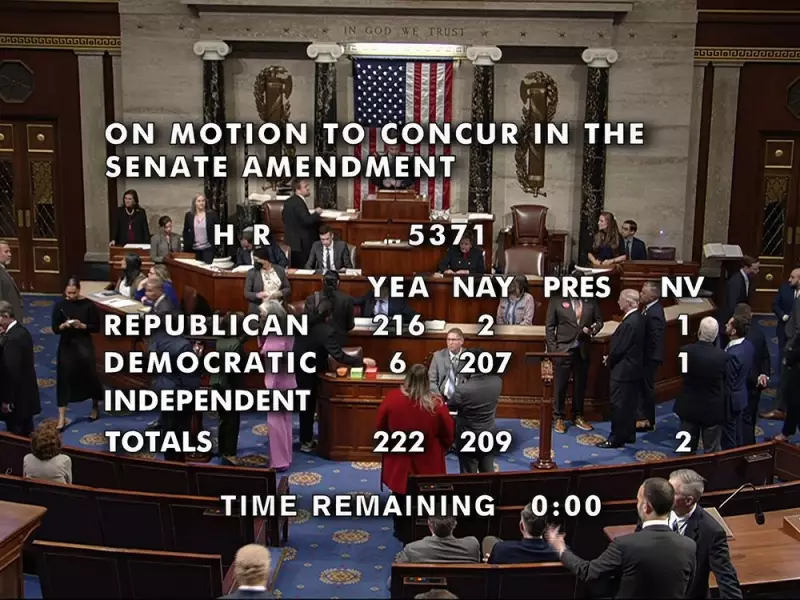
The United States House of Representatives has passed a temporary spending bill, setting the stage to conclude the longest federal government shutdown in the country's history. The 42-day political standoff between President Donald Trump and congressional Democrats caused significant nationwide disruptions, including flight cancellations and delayed food assistance for millions.
Breaking the Political Impasse
The House voted 222 to 209 on Wednesday, November 12, 2025, to approve the stopgap funding measure. The bill garnered opposition from most Democrats as it did not include their central demand: the renewal of expiring subsidies for Affordable Care Act health insurance policies. However, seven Senate Democrats and one Democratic-aligned independent broke with their party to support the bill. Their support was secured in exchange for a promised Senate vote on extending the Obamacare subsidies.
The White House confirmed that President Trump will sign the spending package, formally ending the shutdown within hours of the House vote.

Immediate Consequences and Lingering Effects
While the political battle concludes, fully restarting the massive federal bureaucracy will take days. Transportation Secretary Sean Duffy indicated that it could take about a week to begin lifting the flight restrictions that plagued major airports across the nation.
The economic toll of the six-week closure has been substantial. The Congressional Budget Office projected it would lower real gross domestic product growth in the current quarter by 1.5 percentage points. While more than half of this loss might be recouped early next year as federal programs resume and employees receive back pay, the immediate damage is clear.
Delta Air Lines Inc. CEO Ed Bastian stated that the shutdown-related flight cancellations would negatively impact the airline's quarterly earnings, though normal operations are expected to resume for the busy Thanksgiving holiday.
Impact on Vulnerable Americans and Federal Workers
The shutdown severely affected social programs. Many of the 42 million low-income Americans relying on the federal food stamp program were denied their November benefits. States now report they will need up to a week to update beneficiary files and reload debit cards, with potential bottlenecks expected as all states attempt this process simultaneously.
Furthermore, most federal employees have not received a paycheck in over a month, regardless of whether they were required to work during the shutdown. The financial markets also suffered from a lack of data, as the government ceased publishing key economic reports. The White House Press Secretary, Karoline Leavitt, confirmed that the October jobs report and consumer price index are unlikely to be released due to the shutdown.