Justices on the Virginia Supreme Court expressed uncertainty during oral arguments over whether a recently passed redistricting amendment, which could create four additional Democratic seats in Congress, should be approved. Republicans challenging the redistricting bid argue that Democrats in Virginia’s General Assembly violated procedural rules by failing to provide voters with adequate notice about the new maps and by not observing deadlines for special sessions.
Background of the Amendment
Voters approved redrawing Virginia’s congressional map by a narrow margin of 51% to 49%. The General Assembly first approved the amendment last year and again in January of this year. Despite this, Republicans contend that the amendment should still be voided. A district judge placed the amendment on hold in February, and on Monday, the Virginia Supreme Court posed several questions to both sides.
Judicial Concerns
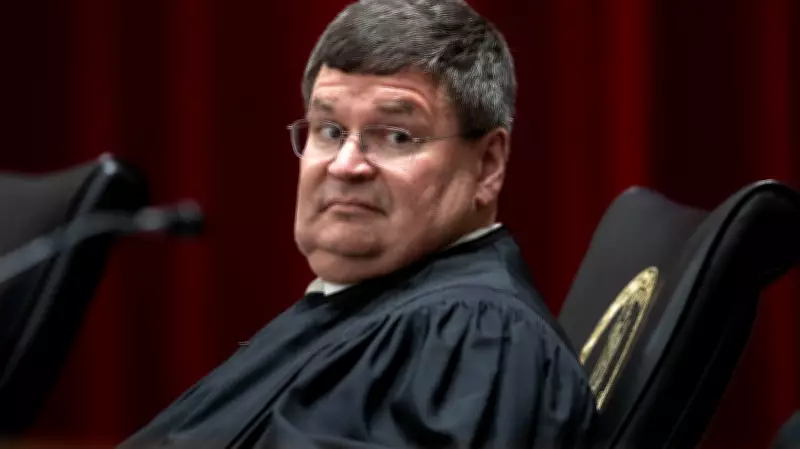
Justice Wesley Russell appeared particularly skeptical about the redrawing process and the fairness of early voting and special sessions in general. Russell expressed concern that early voting might disadvantage individuals who cast ballots for a candidate but later disagreed with that candidate’s stance on redistricting. Virginia’s attorney, Matthew Seligman, countered that this is an inherent risk of early voting and that every voter has the choice to vote on Election Day. He noted that in this case, Democratic voters supported candidates who backed redistricting, and the amendment was properly ratified until the courts intervened.

Procedural Requirements
Under Virginia law, constitutional amendments must be passed twice with an election in between. When legislators finalized the redistricting amendment at the end of October last year, they did so during a “special session” originally called in 2024 by then-Governor Glenn Youngkin (R) to address the state budget. The General Assembly referred the proposed amendment to its next session after the general election on November 4, and then passed it a second time in January. The public voted to approve it on April 21.
Arguments Against the Amendment
Justice Russell lamented that the special session had lasted two years. Thomas McCarthy, attorney for the Republicans opposing the measure, argued that the legislature would never have considered the referendum without the “improperly expanded special session.” He noted that a two-thirds majority vote is required to convene a special session, yet the October session was held with only a simple majority. McCarthy emphasized, “Virginia has long distrusted legislative power and feared the tyranny of permanent legislature. That’s why there are strict limits.” He further contended that Democrats should not have been able to propose items unrelated to the state budget, as the budget was the original reason for the 2024 special session. According to McCarthy, “the bare partisan majority rammed it through the legislature.”
Defense of the Amendment
Virginia Solicitor General Tillman Breckenridge argued that the amendment was not forced on anyone and that the legislature had the authority to remain in recess as long as it wished. He pointed out that there was no “perpetual” governance, as “they only actually did business for 14 days” during the special session. Breckenridge maintained that the process was lawful and that the amendment should stand.
Irony in Arguments
The hearing also featured an ironic twist. Typically, Republicans—especially those supporting President Donald Trump—claim that early voting is akin to cheating because it improperly extends the time frame for elections as defined by the Constitution. Just last month, Republicans at the U.S. Supreme Court argued that an “election” should be defined solely as Election Day. However, in challenging the redistricting amendment that would benefit Democrats, Republicans urged the Virginia Supreme Court to view the “election” in its entirety, including the early voting period, rather than a single day. McCarthy argued, “None of these voters had any idea this amendment was coming. And that’s not how this process is supposed to work.”
It remains unclear when the Virginia Supreme Court will issue a ruling, as no deadline has been set.