White House Press Secretary Faces Intense Backlash Over Trump's Iran Strike Rationale
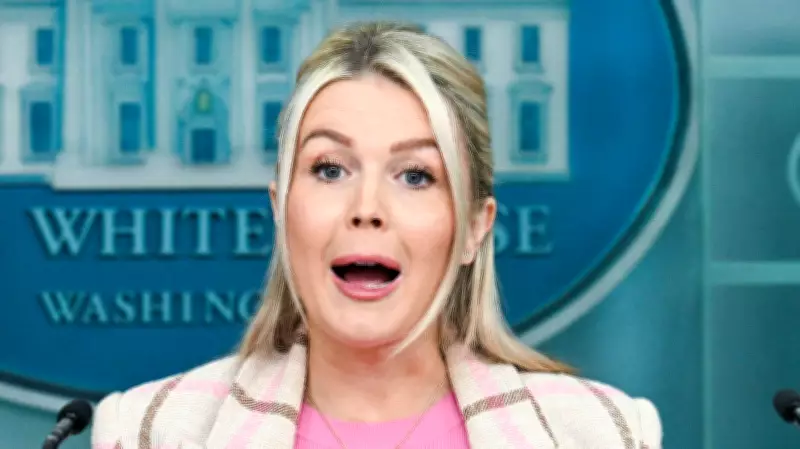
White House press secretary Karoline Leavitt ignited a firestorm of criticism on Tuesday after defending President Donald Trump's justification for attacking Iran as being rooted in what she described as "a feeling based on facts." The controversial remarks came during a tense press briefing where Leavitt was pressed about the intelligence behind Trump's claims regarding imminent Iranian aggression.
Operation Epic Fury Justification Questioned
Reporters challenged Leavitt about Trump's assertion that Iran was preparing to strike U.S. targets within three days, prompting what the administration has dubbed Operation Epic Fury. When asked specifically where the president obtained this information, Leavitt responded: "That's not the first time the president has said that he chose to launch Operation Epic Fury because he felt as though Iran was going to strike the United States and our assets in the region first."
She elaborated further, stating: "This was a feeling the president had based on facts." Leavitt attempted to clarify that these were "facts provided to him by his top negotiators who had been engaged with the Iranian regime in a good faith effort," while simultaneously accusing Iran of "lying, deceiving the United States of America" and pursuing nuclear weapons development.

Critics Decry 'Feeling-Based' Warfare
The response from critics was immediate and scathing. Numerous commentators and social media users seized on Leavitt's phrasing, arguing it amounted to an admission that Trump had initiated military action based on subjective feelings rather than concrete evidence.
Prominent voices across social media platforms expressed outrage:
- "Imagine if Jen Psaki had said nonsense like this on behalf of Biden or Robert Gibbs had said this on behalf of Obama? Insane the kinda crap they get away with saying to the media," one critic noted.
- Journalist Mehdi Hasan tweeted: "He had a 'feeling' about launching an unprovoked and illegal war of aggression."
- Another user remarked: "World has literally been set on fire, children murdered, civilians murdered, thousands displaced and all on the basis of 'feelings'. I've never heard of anything more moronic."
Defense of Presidential Decision-Making
Leavitt stood by her characterization during the briefing, insisting that Trump was "not making anything up" regarding his three-day claim. She argued that Iran had chosen "this path to death and destruction" and warned that Iran's ballistic missile arsenal could soon reach a point where no U.S. president would be able to challenge it effectively.
The press secretary's comments highlighted the ongoing tension between the administration's national security assertions and demands for transparent evidence from journalists and critics. Leavitt maintained that the president's feelings were informed by classified intelligence and negotiations, though she did not provide specific details about the alleged imminent threat.
Broader Implications for National Security Discourse
The controversy has sparked broader discussions about presidential authority, military decision-making, and the standards for justifying armed conflict. Critics have pointed to what they see as a dangerous precedent of justifying warfare based on subjective perceptions rather than verifiable intelligence.
Social media reactions ranged from sarcastic commentary about "feelings based on facts" being "new legalese" to serious concerns about the implications for international relations and military accountability. The phrase quickly became a trending topic, with many users drawing comparisons to previous administrations and questioning the evidentiary standards being applied.
As the debate continues, the White House faces mounting pressure to provide more substantial justification for Operation Epic Fury beyond what critics have dismissed as presidential intuition. The incident has further polarized discussions about executive power, military intervention, and the transparency expected from government officials during times of international conflict.