Canada's Foreign Policy Faces Contradiction as China Partnership Grows
As the world marks the fourth anniversary of Russian President Vladimir Putin's full-scale invasion of Ukraine, Canada finds itself in a complex diplomatic position. The country has emerged as a strategic partner with China, a nation that NATO explicitly describes as the "decisive enabler" of Russia's ongoing military aggression in Eastern Europe.
Substantial Ukrainian Support Meets Strategic Partnership
The Canadian federal government has committed nearly $22 billion to support Ukraine throughout its four-year struggle against Russian oppression. This substantial assistance package includes approximately $12 billion in direct financial support and another $6.5 billion in military assistance, demonstrating Canada's significant investment in Ukrainian sovereignty and security.
Yet simultaneously, Canada has entered into what Prime Minister Mark Carney describes as a "strategic partnership" with Chinese President Xi Jinping. This developing relationship extends far beyond traditional trade agreements, encompassing areas such as public safety cooperation and security collaboration between Chinese and Canadian law enforcement agencies.

NATO's Clear Position on China's Role
As a founding member of NATO, Canada presumably aligns with the military alliance's assessment that China has become instrumental in sustaining Russia's war effort. NATO's official position states that China enables Russia's aggression through what it calls a "no limits" partnership and substantial support for Russia's defense industrial base.
"This includes the transfer of dual-use materials, such as weapons components, equipment, and raw materials that serve as inputs for Russia's defence sector," NATO documents reveal. "The People's Republic of China cannot enable the largest war in Europe in recent history without this negatively impacting its interests and reputation."
Contradictory Policies and Security Concerns
The partnership with China appears particularly contradictory given Carney's own characterization of China as Canada's "greatest security threat" in April, followed by findings from the foreign interference inquiry that identified China as "the most active perpetrator of foreign interference targeting Canada's democratic institutions."
While China officially denies direct involvement in Putin's war against Ukraine, evidence suggests substantial indirect support. Recent testimony before the United Kingdom's defence committee indicated that approximately 60% of Russia's war effort receives covert financial backing from China.
"Russia can only maintain this war because China is essentially bankrolling it," retired Air Marshal Edward Stringer testified earlier this month. This support manifests through massive purchases of Russian oil and natural gas, along with exports of advanced technology with military applications, including drone systems.
Beyond Trade: Security Implications
The Canada-China strategic partnership includes agreements on "pragmatic and constructive engagement in public safety and security," involving police cooperation between the two nations. Canadian officials have declined to make public the specific details of these security arrangements, raising questions about transparency and alignment with Canada's stated foreign policy objectives.
This evolving relationship with China creates a fundamental tension in Canada's international positioning. On one hand, the country positions itself as a staunch defender of Ukrainian sovereignty against Russian aggression. On the other, it deepens ties with the nation that NATO identifies as crucial to sustaining that very aggression.
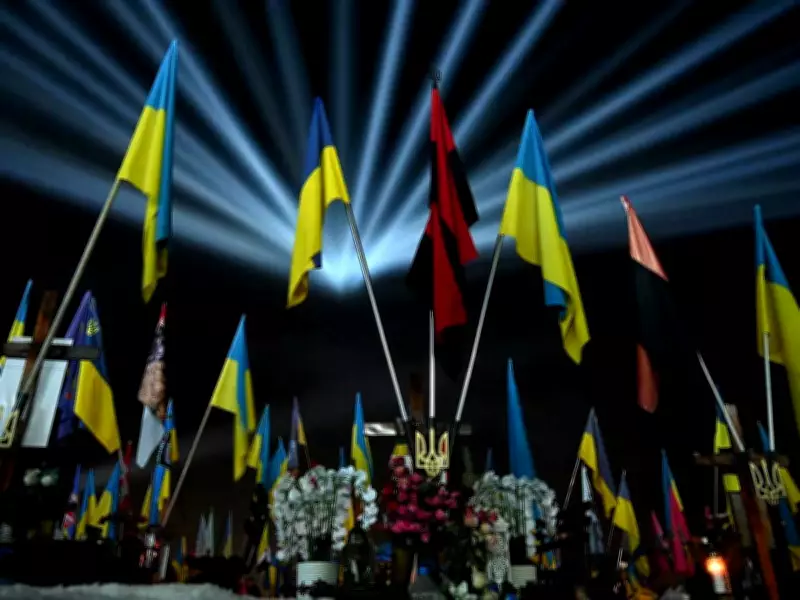
The symbolic illumination entitled "Rays of Memory" projected over the graves of Ukrainian soldiers at Lychakiv Military Cemetery in Lviv serves as a poignant reminder of the human cost of the ongoing conflict. As Canada navigates these complex diplomatic waters, the consistency and coherence of its foreign policy approach will face increasing scrutiny from allies and observers alike.