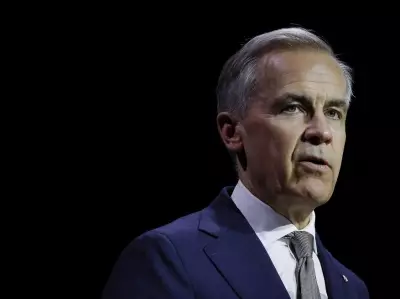
In a significant diplomatic development, former Canadian Prime Minister Mark Carney has agreed to accept a role on a Gaza peace initiative spearheaded by U.S. President Donald Trump. The announcement, made public on January 16, 2026, positions Carney on a newly formed advisory panel aimed at addressing the ongoing conflict between Israel and Hamas.
A High-Profile Appointment for a Complex Conflict
The decision follows a meeting between President Trump and Prime Minister Carney in the Oval Office on October 7, 2025. While the exact mandate and composition of the so-called 'Board of Peace' remain under development, Carney's acceptance signals his continued engagement in international affairs post-premiership. His involvement is expected to bring a Canadian and Commonwealth perspective to the United States' efforts to mediate one of the world's most intractable disputes.
This move comes amidst a complex geopolitical landscape. The Israel-Hamas war, a protracted and devastating conflict, has seen numerous international attempts at negotiation and ceasefire. The creation of this board represents the Trump administration's latest strategy to formulate a path toward stability in the region.

Carney's Evolving Role in Global Politics
Mark Carney, who previously served as Governor of the Bank of England before his tenure as Canada's Prime Minister, is no stranger to high-stakes international diplomacy and economic statecraft. His acceptance of this role underscores a shift from domestic and economic policy to direct involvement in foreign conflict resolution.
Analysts suggest that Carney's financial expertise and experience in navigating complex multilateral institutions could be assets in addressing the economic and humanitarian dimensions of the Gaza crisis. However, his participation in a U.S.-led initiative may also draw scrutiny regarding Canada's traditional positioning on the conflict and its alignment with American foreign policy objectives.
Implications for Canada-U.S. Relations and Middle East Diplomacy
The appointment is likely to have ripple effects on bilateral relations between Ottawa and Washington. By taking a seat at this table, Carney, a prominent Canadian figure, effectively aligns himself with a key policy priority of the Trump administration. This could foster closer cooperation between the two nations on Middle East policy but may also provoke debate within Canada about the direction of its independent foreign policy.
The success of the Board of Peace will depend on numerous factors, including the buy-in from regional actors like Israel, the Palestinian Authority, and neighboring Arab states. Carney's challenge will be to leverage his diplomatic credibility to help craft viable, lasting solutions where many previous efforts have faltered. The world will be watching closely as this new board begins its work in the coming months.