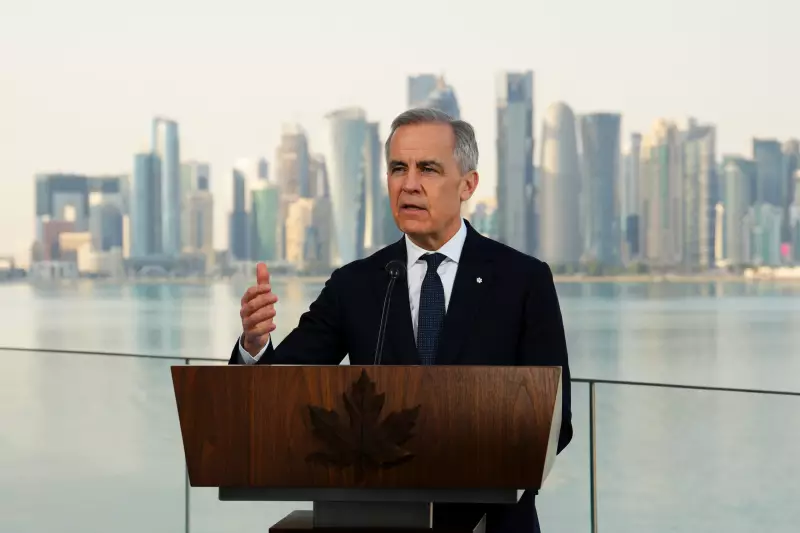
Former Bank of Canada and Bank of England Governor Mark Carney has agreed "in principle" to join a proposed international board aimed at fostering peace in Gaza, an initiative floated by former U.S. President Donald Trump. The development, confirmed on January 19, 2026, comes with immediate questions about the board's operational funding and long-term goals.
Lack of Clarity on Financial Backing
Jon Allen, Canada's former ambassador to Israel, has publicly expressed significant concerns regarding the initiative's financial underpinnings. Allen stated there is currently "a real lack of clarity" concerning where the money to fund the so-called 'Board of Peace' will ultimately originate and how it will be managed. This ambiguity raises important questions about the board's independence and potential influence.
Notably, discussions surrounding Carney's involvement have not included any talk of a membership fee for participants. Carney's agreement to join is seen as lending considerable economic and diplomatic credibility to the nascent effort, given his extensive international financial experience.

Broader Political Context and Canadian Response
This news emerges alongside other significant Canadian foreign policy considerations. The federal government is reportedly contemplating sending a small number of troops to Greenland. This move is viewed as a strategic response to renewed efforts by Trump to acquire the autonomous Danish territory, a long-standing ambition of his previous administration.
Separately, Prime Minister Carney has been actively seeking international investments at the World Economic Forum in Davos. He has also voiced concern over escalating U.S. efforts in the region, particularly in the context of the push to purchase Greenland, highlighting a complex period in Canada-U.S. relations.
Implications and Unanswered Questions
Carney's conditional agreement to serve on Trump's peace board places a prominent Canadian figure at the heart of a potentially controversial international endeavor. The lack of detailed financial transparency, as pointed out by experts like Jon Allen, will likely be a focal point for scrutiny from diplomats and policy analysts alike.
The success and legitimacy of the board may hinge on its ability to clearly define its funding sources, governance structure, and specific objectives for Gaza. As the situation develops, the international community will be watching closely to see how this initiative takes shape and what tangible impact it might have on one of the world's most protracted conflicts.