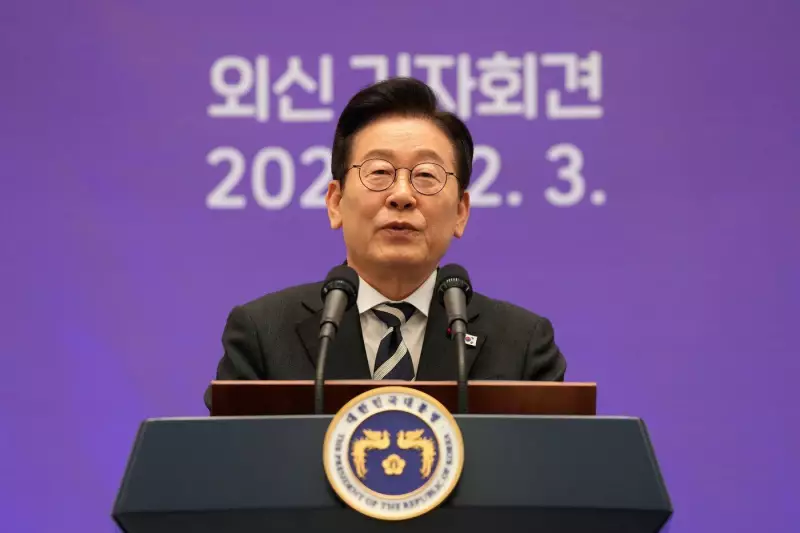
Chinese President Xi Jinping is set to host South Korean President Lee Jae Myung for a significant New Year meeting, according to reports from January 1, 2026. The diplomatic engagement comes at a time of heightened regional friction, particularly involving Japan.
A Strategic New Year's Meeting
The talks between the two leaders represent a carefully timed diplomatic initiative. By extending an invitation to President Lee at the start of the year, Beijing is signaling a priority on stabilizing and advancing its relationship with Seoul. This move is widely seen as an effort to strengthen bilateral ties independently of the complex web of alliances and historical grievances that define the region.
The meeting was confirmed for New Year's Day, January 1, 2026. While the full agenda has not been publicly disclosed, analysts expect discussions to cover trade, regional security, and the ongoing strategic competition in the Asia-Pacific. The context of the meeting is impossible to ignore, as it occurs against a backdrop of persistent and unresolved tensions with Japan, a key U.S. ally in the region.
Navigating Regional Frictions
The diplomatic landscape in Northeast Asia remains fraught with historical disputes and contemporary strategic rivalries. China's relationships with both South Korea and Japan are multilayered, involving deep economic interdependence alongside political and security disagreements.
South Korea's Lee Jae Myung arrives at the meeting navigating a delicate balance. Seoul maintains a crucial military alliance with the United States, which also closely partners with Japan. However, South Korea has its own historical disputes with Tokyo, which occasionally flare up and complicate trilateral cooperation. Engaging directly with Xi allows Lee to assert South Korea's independent diplomatic agency and address issues of direct concern to Seoul, potentially including economic cooperation and stability on the Korean Peninsula.
For President Xi Jinping, the meeting is an opportunity to drive a wedge in the strengthening security cooperation between Seoul, Tokyo, and Washington. By fostering a closer relationship with South Korea, China aims to complicate the unified front often presented by its rivals and create more favorable conditions for its own regional ambitions.
Implications for the Asia-Pacific Order
This New Year's summit will be closely watched by capitals around the world, especially in Tokyo and Washington. The outcome could have tangible effects on everything from supply chain resilience to security postures in the East China Sea and the Taiwan Strait.
A warmer China-South Korea relationship, if it materializes from this meeting, could lead to increased economic collaboration, potentially sidelining Japanese interests in certain sectors. Conversely, if the talks yield little of substance, it may reinforce the existing trajectory of South Korea moving closer to its traditional allies. The meeting underscores the ongoing realignment of power dynamics in one of the world's most critical regions, where New Year's diplomacy is just the opening move in a much longer strategic game.