Cuban President Confirms Recent Diplomatic Talks with United States
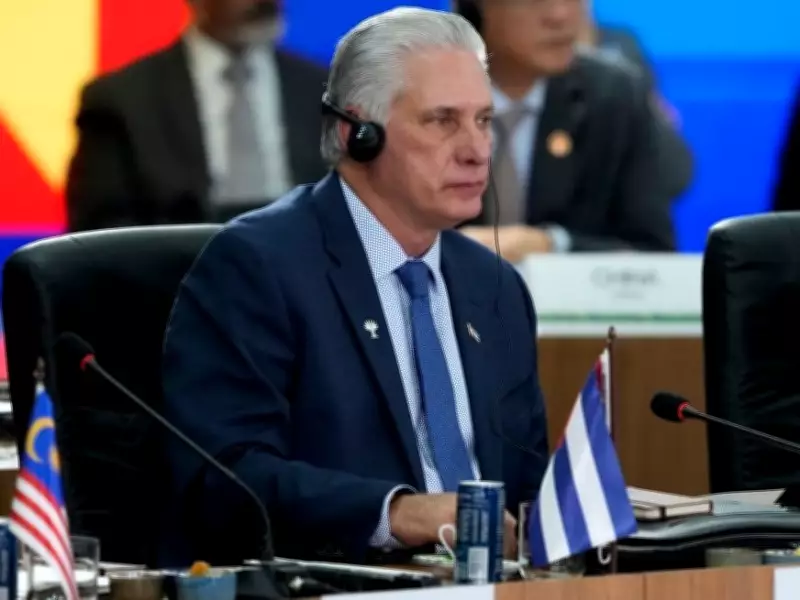
Cuban President Miguel Diaz-Canel announced on Friday that his government has engaged in recent diplomatic discussions with the United States. This marks the first official confirmation from the Caribbean nation regarding such bilateral exchanges, which have been subject to speculation in international circles.
President Diaz-Canel stated that the talks were specifically "aimed at finding solutions through dialogue to the bilateral differences between our two nations." He further noted that "international factors facilitated these exchanges," though he declined to elaborate on those factors or provide specific details about the content and participants of the discussions.
Severe Energy Crisis Grips Cuba
The announcement comes as Cuba faces a profound energy crisis that has severely impacted daily life across the island. Diaz-Canel revealed that no petroleum shipments have arrived in Cuba for the past three months, a situation he directly attributes to what he describes as a U.S. energy blockade against the nation.

Last week, Cuba's western region experienced a massive blackout that left millions of residents without electrical power. The president explained that while Cuba produces approximately 40% of its own petroleum, this domestic production has proven insufficient to meet national energy demands.
"The impact is tremendous," Diaz-Canel emphasized during his address. He detailed how the power shortages have disrupted communications systems, educational operations, and transportation networks across the country.
Healthcare and Economic Consequences
The energy crisis has forced the Cuban government to postpone surgical procedures for tens of thousands of patients due to inadequate power supply in medical facilities. Diaz-Canel acknowledged that "without energy, no country can produce at normal levels," noting that production output has significantly declined across various sectors.
In response to the petroleum shortage, Cuban authorities have implemented several emergency measures:
- More than 115 bakeries across the island have been converted to operate using firewood or coal instead of conventional energy sources
- 955 solar panels have been installed in rural homes and social centers
- Additional solar systems scheduled to come online before the end of March will add approximately 100 megawatts to Cuba's aging electrical grid
"Even with everything we're putting together, we still need oil," the president admitted, highlighting the continued dependence on petroleum despite renewable energy initiatives.
Objectives of U.S.-Cuba Dialogue
Diaz-Canel outlined the purpose of the recent talks with the United States, stating they were intended to identify "bilateral problems that require solutions based on their severity and impact" and to develop resolutions for these issues.
The Cuban leader added that the discussions aimed "to determine the willingness of both parties to take concrete actions for the benefit of the people of both countries." Furthermore, he mentioned the goal of identifying "areas of cooperation to confront threats and guarantee the security and peace of both nations, as well as in the region."
Diaz-Canel emphasized Cuba's willingness to engage in this diplomatic process "on the basis of equality and respect for the countries' political systems" and with recognition of Cuba's "sovereignty and self-determination."
Root Causes of Energy Shortages
The president attributed part of Cuba's energy crisis to the halt of critical oil shipments from Venezuela following U.S. military action against the South American country and the arrest of its leader. This disruption has exacerbated Cuba's existing energy vulnerabilities.
The most recent widespread blackout was reportedly caused by a broken boiler at a thermoelectric plant that forced the shutdown of Cuba's entire power grid. Cuban officials have noted that many thermoelectric facilities have been operating for over three decades with minimal maintenance due to financial constraints.
Government authorities have stated that U.S. sanctions have prevented Cuba from purchasing new equipment and specialized parts needed to maintain and upgrade its energy infrastructure, contributing to the current crisis.

Last month, the Cuban government implemented austere fuel-saving measures in response to the escalating energy situation, affecting both public services and private consumption across the island nation.